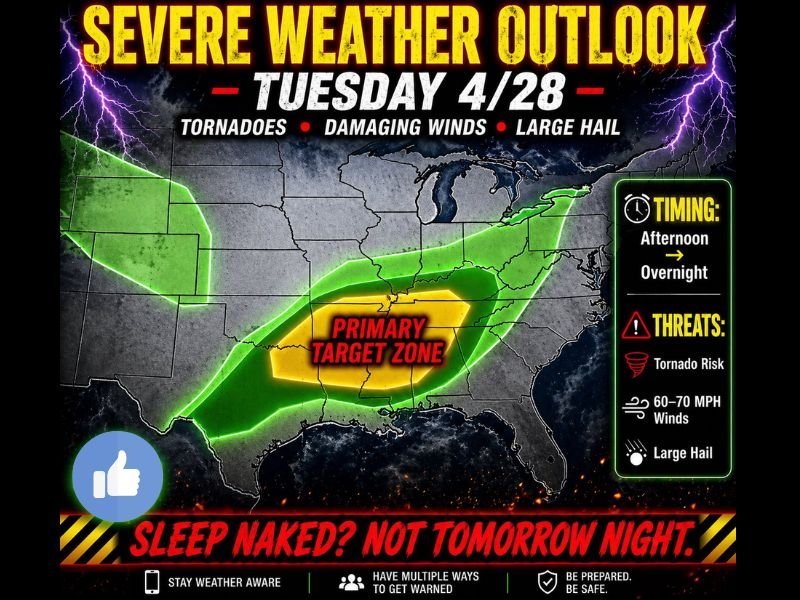
Tornadoes 60 to 70 MPH Winds and Large Hail Target Primary Zone Across the South in Severe Weather Outlook for Tuesday April 28 With Threat Timing From Afternoon Into Overnight
THE SOUTH — A significant severe weather outbreak was forecast to impact a broad primary target zone across the South on Tuesday, April 28, 2026, as a dangerous combination of tornadoes, 60 to 70 mile per hour damaging winds, and large hail threatened communities from the afternoon hours through overnight in one of the most consequential severe weather setups of the season.
The severe weather outlook identified a clearly defined primary target zone highlighted across the central and southern United States, with a wider general threat corridor extending across a much larger swath of the eastern half of the country from the Gulf Coast northward through the Great Lakes region.
Primary Target Zone Faces the Greatest Risk
The primary target zone outlined on the severe weather outlook map concentrated the highest threat across a broad stretch of the South, where atmospheric conditions were most favorable for organized and intense storm development through Tuesday afternoon and into the overnight hours.
Tornado risk, damaging winds reaching 60 to 70 miles per hour, and large hail represented the full suite of hazards facing communities within the primary zone, with all three threats capable of producing significant damage and life-threatening conditions across the impacted region.
Timing Runs From Afternoon Through Overnight
The timing of the severe weather threat added a critical layer of danger to the Tuesday outlook. Storms were expected to initiate during the afternoon hours and continue pushing through the primary target zone well into the overnight period, meaning residents could not rely on visual storm spotting during the most active phase of the event.
With storm activity persisting into overnight hours, having multiple methods of receiving weather warnings became essential for communities across the primary target zone. Keeping mobile devices fully charged and weather alert notifications active through the night was strongly advised for all residents within the threat area.
60 to 70 MPH Winds Capable of Widespread Destruction
The damaging wind threat accompanying the Tuesday severe weather system reached 60 to 70 miles per hour, a range capable of producing widespread and significant destruction across affected communities. Winds of this magnitude down large trees, destroy outbuildings, damage rooftops, and cause widespread power outages that can persist for extended periods following the storm passage.
Unsecured outdoor property including furniture, signage, and loose materials represented an immediate hazard to surrounding structures and vehicles as wind gusts of this intensity moved through the primary target zone.
Preparation and Awareness Critical Before Storm Arrival
Residents across the primary target zone were urged to have alerts active, devices fully charged, and a clear shelter plan established well before afternoon storm development began on Tuesday. Knowing the location of the nearest sturdy shelter and having multiple ways to receive official warnings represented the most critical preparation steps ahead of the Tuesday afternoon into overnight severe weather event.
For continuing coverage of severe weather events and critical storm analysis across the United States, visit SaludaStandard-Sentinel.com.