Record Breaking 80 to 81 Degree Heat Targets Seattle and Puget Sound Area Sunday and Monday as Hottest Days of 2026 So Far Shatter the Existing May 3 Record of 77 Degrees
SEATTLE, WA — Seattle and the Puget Sound area were forecast to experience the hottest two days of 2026 on Sunday and Monday, with temperatures reaching 80 to 81 degrees and surpassing the existing May 3 record high of 77 degrees set in 1992 by a significant margin, making Sunday a genuine record-breaking day for the city despite the nuanced context surrounding the specific date record.
The two-day heat event was expected to be short-lived, with temperatures cooling back into the more comfortable 70s for the remainder of the week and potentially dipping into the 60s by Friday as marine layer influence returned to the region.
A Record With an Asterisk
While an 81 degree high would technically shatter the May 3 record of 77 degrees by four degrees, the broader context revealed an interesting climatological quirk. May 3 holds the only remaining record high in the 70s across the entire month of May in Seattle’s 80-plus year record at Sea-Tac Airport, with the next coldest May record high sitting at 82 degrees on May 7. The surrounding week’s average record high temperature sits at 84 degrees, making the May 3 record an unusually low outlier rather than a reflection of genuinely exceptional heat for the season.
Monday carried a similarly forecast high of 81 degrees but fell well short of that date’s record of 85 degrees, keeping Monday in impressive but non-record territory.
High Pressure Ridge Shields Seattle From Pacific Storm System
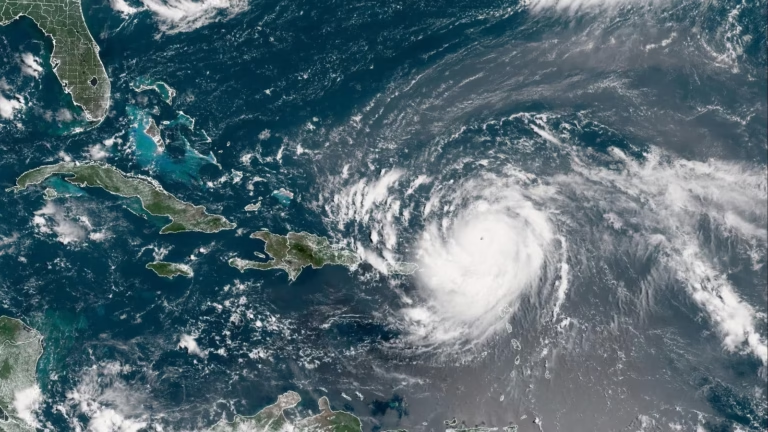
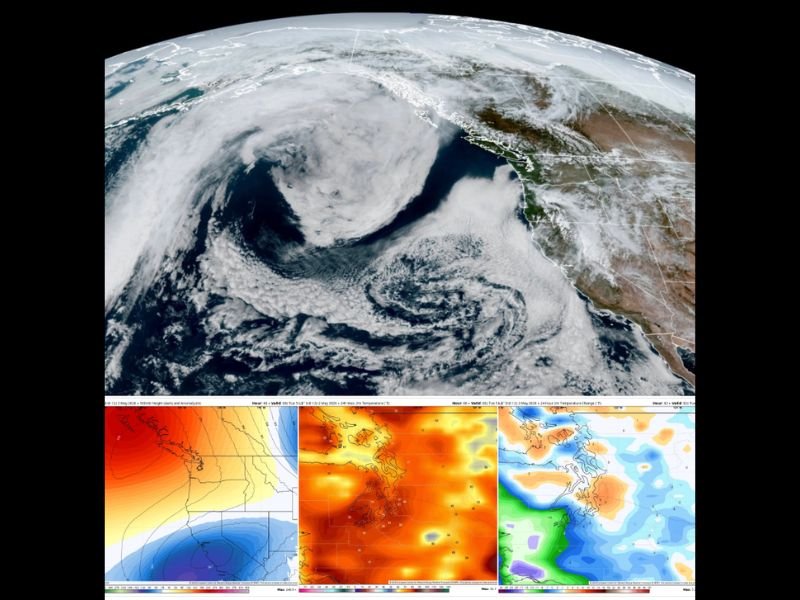
Satellite imagery showed a dramatic and visually striking spiral storm system churning off the Pacific Coast, with a large and organized low pressure system positioned offshore. Despite the imposing appearance of the offshore storm, a strong ridge of high pressure kept the system at bay and prevented any significant weather impact across the Seattle and Puget Sound region through the heat event period.
The ridge responsible for driving the record warmth also maintained the dry and rain-free conditions across the area, with no rainfall expected in the forecast for at least the following week across the Pacific Northwest.
For continuing coverage of weather events and critical storm analysis across the United States, visit SaludaStandard-Sentinel.com.