Hazardous Arctic Cold Tightens Its Grip Across the Central and Eastern United States With Multi-Day Freeze and Dangerous Wind Chills
UNITED STATES — A widespread and dangerous Arctic cold outbreak is settling across large portions of the Central and Eastern United States, bringing hard freezes, violent wind chills, and prolonged sub-freezing conditions that will persist through the weekend and into early next week. Forecast guidance shows this is not a brief cold snap, but a multi-day event capable of causing infrastructure damage and safety risks if precautions are not taken.
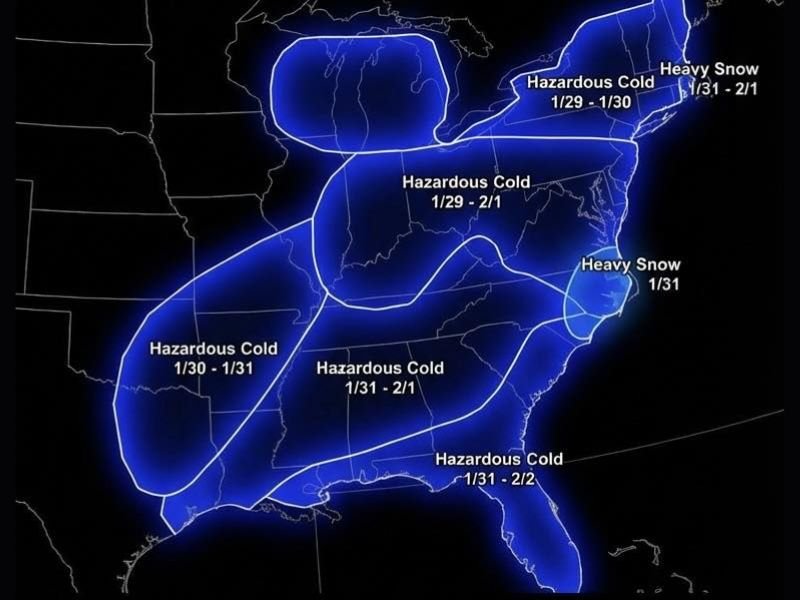
Hazardous Cold Expands Across Multiple Regions
The cold air mass is spreading across the Midwest, Tennessee Valley, Deep South, and Southeast, with hazardous conditions expected to last several days depending on location. Much of the affected area will experience overnight lows well below freezing, while strong winds drive wind chill values into dangerously low territory, especially during nighttime and early morning hours.
This event is driven by a deep Arctic air intrusion, allowing cold air to surge far south into areas that typically do not experience sustained winter extremes.
Wind Chills Turn Cold Into a Safety Threat
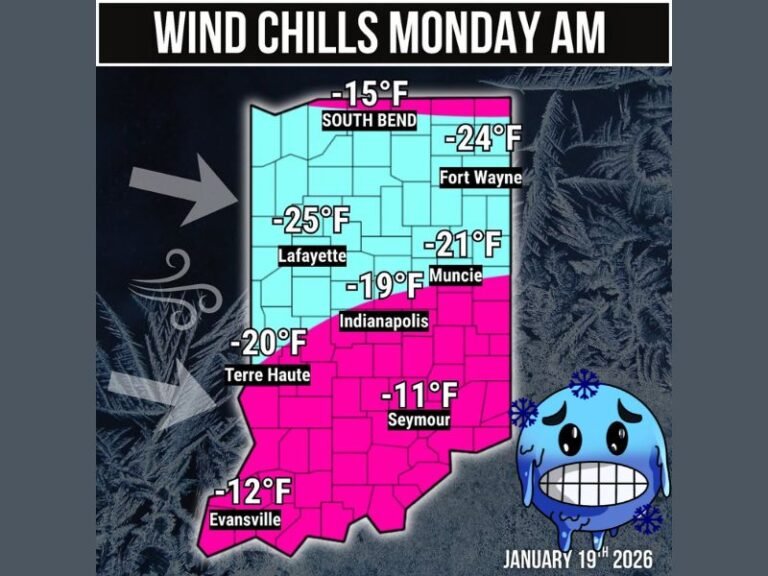
What makes this outbreak particularly dangerous is not just the temperature, but the combination of cold air and persistent winds. Wind chills will make conditions feel significantly colder than actual air temperatures, increasing the risk of frostbite, hypothermia, and cold-related illness.
Even locations that rarely see winter hazards may experience single-digit or below-zero wind chills, particularly overnight and before sunrise.
Infrastructure and Daily Life Impacts Likely
Extended freezing temperatures raise concerns for frozen and burst pipes, vehicle battery failures, and strain on heating systems. Areas unaccustomed to prolonged cold are especially vulnerable, as homes and plumbing may not be winterized for this level of exposure. Outdoor water lines, irrigation systems, and poorly insulated plumbing are at high risk of failure during this event.
Vulnerable Populations Face Elevated Risk
The prolonged nature of this cold spell places elderly residents, young children, outdoor workers, and those without reliable heating at elevated risk. Pets and livestock are also vulnerable and should be provided with adequate shelter and warmth.
Cold exposure can become life-threatening faster than many realize, particularly when wind chills remain low for several consecutive nights.
Preparedness Is Critical As Cold Persists
Residents across the affected region are urged to take this outbreak seriously and avoid underestimating its impact. Simple precautions can significantly reduce risk, including:
- Bringing pets indoors
- Protecting exposed pipes
- Checking on neighbors and family members
- Using space heaters safely
- Limiting time outdoors during peak cold
This Arctic cold event is expected to linger, not pass quickly, making preparation and awareness essential.
Stay alert, stay prepared, and continue following updates as conditions evolve. Share how this cold is affecting your area and stay informed with continued coverage from SaludaStandard-Sentinel.com.