Mandatory Water Restrictions Take Effect Friday May 15 Across Charlotte, Cornelius, Davidson, and Huntersville as Catawba-Wateree River Basin Enters Stage 2 Drought Protocol
CHARLOTTE, NC — Worsening drought conditions across the Catawba-Wateree River Basin prompted the Catawba-Wateree Drought Management Advisory Group to declare the basin has entered Stage 2 of the Low Inflow Protocol, triggering mandatory water restrictions across Charlotte, Cornelius, Davidson, and Huntersville beginning Friday, May 15, as lakes and streams continued falling rapidly despite recent rainfall.
The mandatory restrictions came as no significant rainfall was expected over the following week, making conservation measures immediately critical for the communities served by Charlotte Water across the basin.
What Residents Cannot Do Under the Restrictions
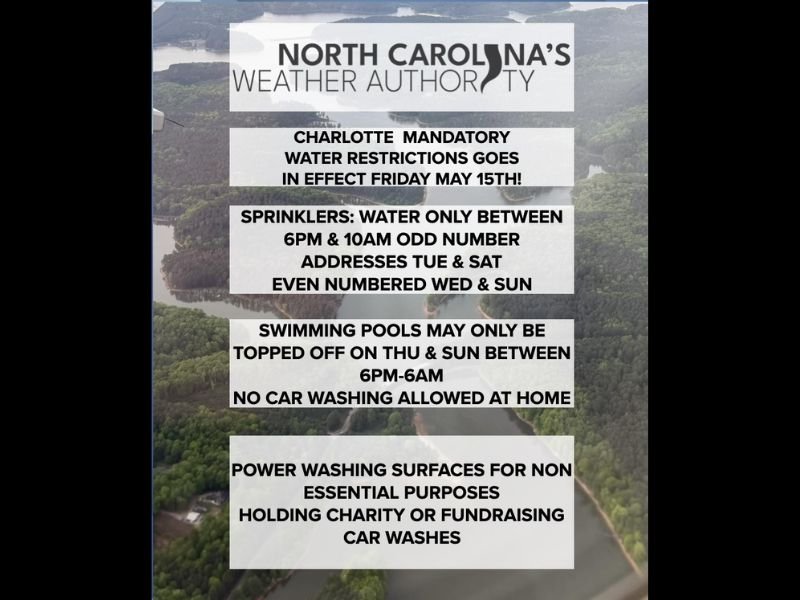
The Stage 2 restrictions prohibited several common outdoor water uses across the affected communities. Washing vehicles at home and holding charity car washes were banned under the new rules. Filling swimming pools completely was prohibited, as was power washing for non-essential purposes. Running decorative water features not supporting aquatic life was also prohibited, along with watering lawns between 6 AM and 6 PM daily.
What Residents Are Still Permitted to Do
Lawn watering remained permitted but only between 6 PM and 6 AM on designated days. Odd-numbered addresses could water on Tuesday and Saturday while even-numbered addresses were assigned Wednesday and Sunday. Pool topping off was permitted on Thursday and Sunday between 6 PM and 6 AM only. Hand-watering plants, drip irrigation, soaker hoses, and use of commercial car washes all remained permitted under the Stage 2 restrictions.
Broader Basin Communities Also Impacted
Beyond the Charlotte Water service area, multiple communities throughout the broader Catawba-Wateree basin were also implementing restrictions, in some cases beginning even earlier than Charlotte. Communities including Belmont, Gastonia, Hickory, Lenoir, Mooresville, Morganton, Mount Holly, Statesville, and Valdese all fell within the impacted basin area and were urged to check with their local water providers for specific restriction details and timelines.
Despite some recent rainfall providing modest drought relief and reducing wildfire risk across the region, lakes and streams within the basin continued falling rapidly, confirming that the precipitation received had not been sufficient to reverse the ongoing drought conditions driving the Stage 2 Low Inflow Protocol declaration.
For continuing coverage of drought conditions and critical news across the United States, visit SaludaStandard-Sentinel.com.