Michigan Tornado Near Union City Confirmed as EF-3 With 150 MPH Winds After Survey Correction, Damage Investigation Still Ongoing
MICHIGAN — Officials investigating the destructive tornado that struck near Union City and Three Rivers have confirmed a preliminary EF-3 rating with estimated winds of about 150 mph, correcting earlier information that briefly suggested stronger wind speeds.
Meteorologists conducting the damage survey clarified that a previously reported 165 mph wind estimate was entered in error, and the official preliminary rating remains EF-3 while analysis continues. The survey remains ongoing, meaning the tornado’s final rating could still change as investigators gather more evidence from the storm’s damage path.
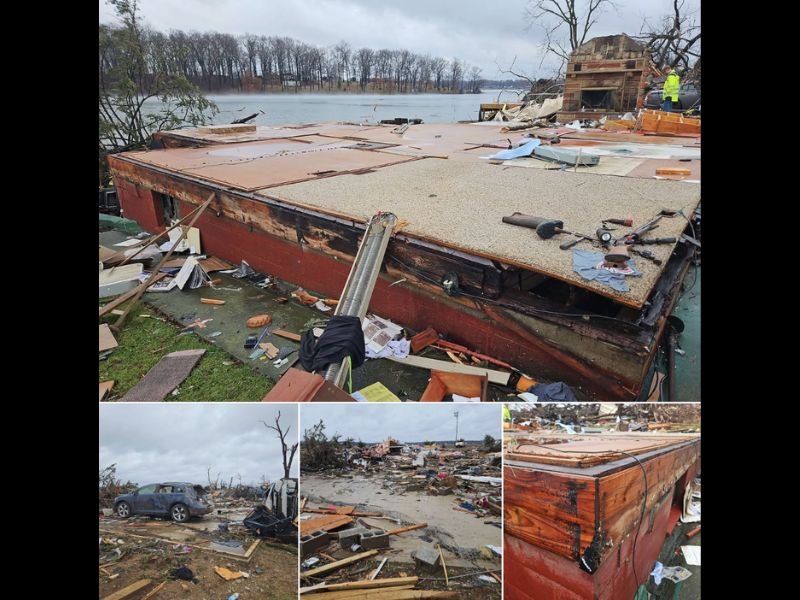
The tornado caused significant destruction across parts of southern Michigan, leaving homes destroyed, vehicles tossed aside, and debris scattered across wide areas.
Survey Teams Confirm Preliminary EF-3 Tornado Rating
Damage survey teams analyzing the storm confirmed that the tornado currently holds a preliminary Enhanced Fujita (EF-3) classification, corresponding to wind speeds of roughly 150 mph.
Earlier reports referencing winds near 165 mph were later corrected, with officials noting the number was entered mistakenly. The updated survey data now lists the tornado at 150 mph, though experts stress the assessment remains preliminary.
Under the Enhanced Fujita scale, EF-3 tornadoes are capable of causing severe structural damage, including the destruction of well-built homes, heavy damage to buildings, and vehicles thrown considerable distances.
Survey teams from weather agencies and specialized damage investigation groups continue examining structures and debris patterns across the impacted communities.
Quick Response Teams Assisting With Damage Investigation
Because of the intensity of the damage observed in some locations, quick response teams (QRTs) were deployed to assist with the tornado survey.
These teams are often brought in when damage appears significant enough that wind speeds could approach the upper range of the EF-3 category or even EF-4 intensity.
Investigators analyze numerous factors during these surveys, including structural failures, debris trajectories, and the overall width and length of the tornado’s path.
Officials say the purpose of the survey is not only to determine the storm’s final rating but also to better understand how the tornado formed and behaved as it moved across the region.
Severe Damage Reported Across the Union City Area
Images from the affected area show extensive destruction to homes and buildings near the shoreline and surrounding neighborhoods.
Some structures were flattened to their foundations, while others were partially destroyed with roofs and walls ripped away by powerful winds.
Vehicles were also heavily damaged or displaced, and large debris fields spread across roads and open areas highlight the intensity of the storm.
Meteorologists say damage patterns will help determine the tornado’s exact wind speeds, path length, and maximum width, all critical components of the final survey results.
Final Tornado Rating Still Possible as Survey Continues
Although the tornado is currently classified as EF-3 with winds around 150 mph, investigators say the final rating could still change as additional damage assessments are completed.
Survey teams will continue reviewing structural damage and aerial imagery before issuing a final determination.
Officials emphasize that tornado ratings often remain preliminary for several days as data is carefully analyzed.
Residents in the affected communities continue cleanup efforts while emergency crews assist with debris removal and safety inspections.
If you experienced the severe storms or have photos from the affected area, share your reports with our newsroom at SaludaStandard-Sentinel.com as we continue covering the impact of severe weather across the United States.