The Jarrell Texas F5 Tornado of May 27 1997 Remains One of the Most Destructive and Extreme Twisters Ever Recorded in United States History
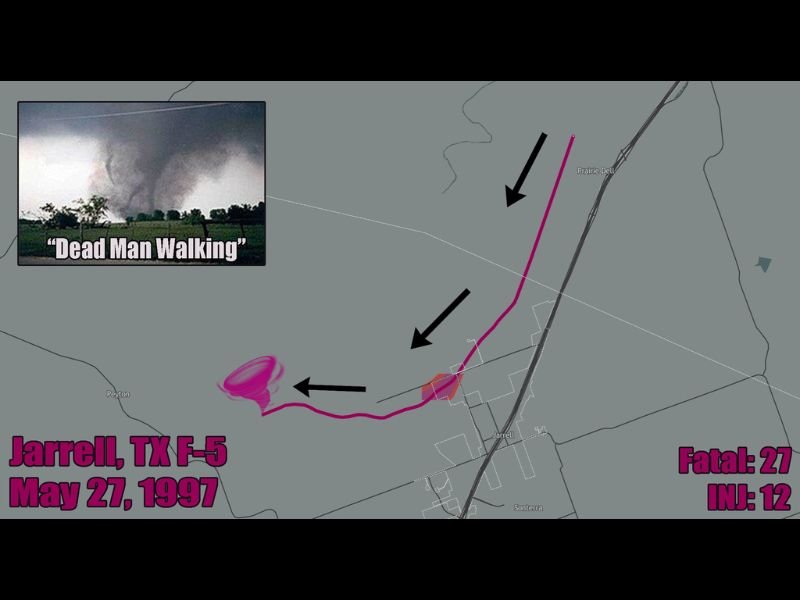
JARRELL, TX — The F5 tornado that devastated Jarrell, Texas on May 27, 1997 stands as one of the most powerful and destructive tornadoes ever documented in recorded meteorological history, leaving behind a trail of catastrophic damage that continues to be studied by atmospheric scientists and storm researchers nearly three decades after the event claimed 27 lives and injured 12 others.
An Unusual and Deadly Storm Movement
Unlike the vast majority of significant tornadoes that track from southwest to northeast across the plains, the Jarrell tornado exhibited a highly unusual southwest to west movement, a characteristic that contributed significantly to the extreme damage it produced along its path through the community.
The parent storm responsible for producing the Jarrell tornado was part of what researchers describe as an unzipping cluster, a formation that developed along a stalled outflow boundary during a period of extreme late spring atmospheric instability across central Texas, creating the conditions necessary for a slow moving and extraordinarily intense tornado to develop and persist over the landscape.
The Dead Man Walking Photograph
The most widely recognized image from the Jarrell tornado event is known as the Dead Man Walking photograph, captured by a worker at Jarrell Farm Supply during the tornado’s passage through the area.
The photograph’s striking and deeply unsettling appearance results from the visibility of multiple sub-vortices within the parent funnel at the precise angle and position from which the image was taken, creating the disturbing visual impression that the tornado possessed legs walking across the ground. The image remains one of the most iconic and studied photographs in the entire history of tornado documentation in the United States.
Damage Beyond Comprehension
The physical destruction left behind by the Jarrell F5 exceeded nearly everything previously documented in tornado damage surveys, with investigators discovering that asphalt pavement had been completely stripped from roadways, deep trenches had been gouged into the earth, and trees had been reduced entirely to bare stumps with root systems exposed.
The slow movement of the tornado allowed it to remain over affected areas for an extended period, dramatically amplifying the energy transferred to structures and the ground surface far beyond what faster moving tornadoes typically produce.
A Permanent Mark on Tornado History
The Jarrell tornado remains a defining case study in extreme tornado behavior, damage potential, and the deadly consequences of slow moving violent wedge tornadoes impacting populated areas with minimal warning time and escape options for residents caught in its path. For continuing coverage of historical weather events and severe weather analysis across the United States, visit SaludaStandard-Sentinel.com.