Massive Flying Termite Swarms Appearing on Doppler Radar Across Louisiana on May 13 Mistaken for Rain as Dense Insect Clouds Rise Over Lake Charles Baton Rouge and New Orleans
LAKE CHARLES, LA — Enormous swarms of flying termites and insects are lighting up Doppler radar across Louisiana on May 13, 2026, creating radar returns so dense they are being mistaken for rainfall across the Lake Charles, Baton Rouge, Lafayette, and New Orleans corridor, as warm humid conditions following recent heavy rain and flooding create ideal conditions for massive termite swarming events across the southern Louisiana region.
Radar Returns Across Louisiana Are Not Rain
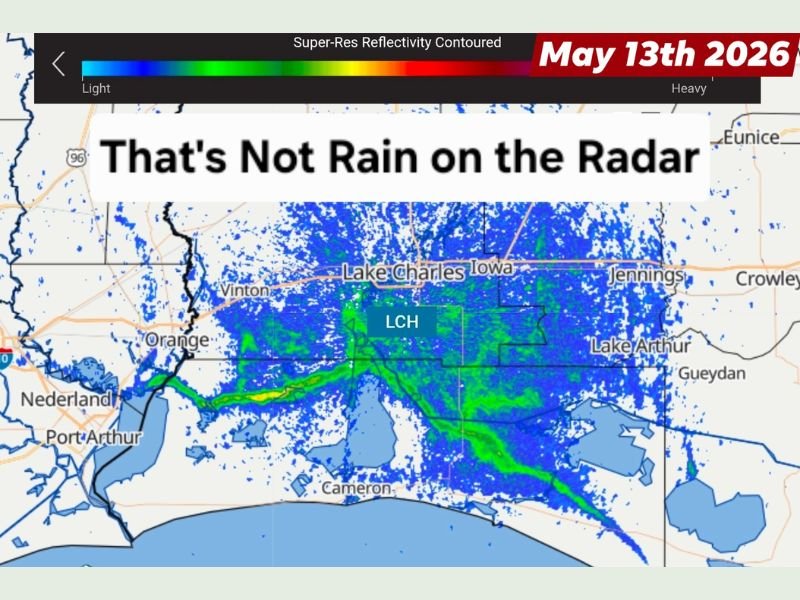
Residents across southern and central Louisiana noticing strange blobs, streaks, and swirling cloud signatures on Doppler radar tonight are not observing rainfall or storm activity. The radar is instead detecting massive swarms of flying termites, insects, and birds feeding on them rising into the atmosphere across the Lake Charles area and surrounding regions, with the swarms reaching sufficient density to register clearly on the same radar technology used to track precipitation and severe weather across the state.
Radar imagery dated May 13, 2026 from the Lake Charles area shows widespread blue and green returns extending across the region that represent insect activity rather than any weather-related precipitation event.
Recent Rain and Flooding Created Perfect Swarming Conditions
The trigger for tonight’s extraordinary termite swarming event is the combination of soaked soil, recent heavy rainfall and flooding, high humidity, warm temperatures, and calm winds across Louisiana that together create textbook conditions for termite colonies to release their reproductive swarmers. Termite colonies send out winged swarmers to establish new colonies following periods of extended moisture and soil saturation, and Louisiana’s recent weather pattern has delivered precisely those conditions across a broad geographic area simultaneously.
This phenomenon occurs almost every year across Louisiana following similar weather setups, though the scale and radar visibility of tonight’s swarms is particularly notable across the southern and central portions of the state.
Swarms Peaking at Dusk Across Multiple Major Cities
The largest and most dense swarm activity is concentrated across southern and central Louisiana including Lake Charles, Baton Rouge, Lafayette, and New Orleans, where warm humid air persisting after recent rainfall keeps conditions ideal for swarming insects through the evening hours. Individual swarms typically peak around dusk and early nighttime, with a single swarming episode lasting approximately 30 minutes to one hour before subsiding.
Louisiana residents are advised to turn off porch lights and unnecessary outdoor lighting, keep doors and windows closed around sunset, and check windowsills for discarded wings as nightly swarming activity could continue off and on for the next couple of weeks while warm humid conditions persist across the region.
For continuing coverage of severe weather events and critical storm analysis across the United States, visit SaludaStandard-Sentinel.com.