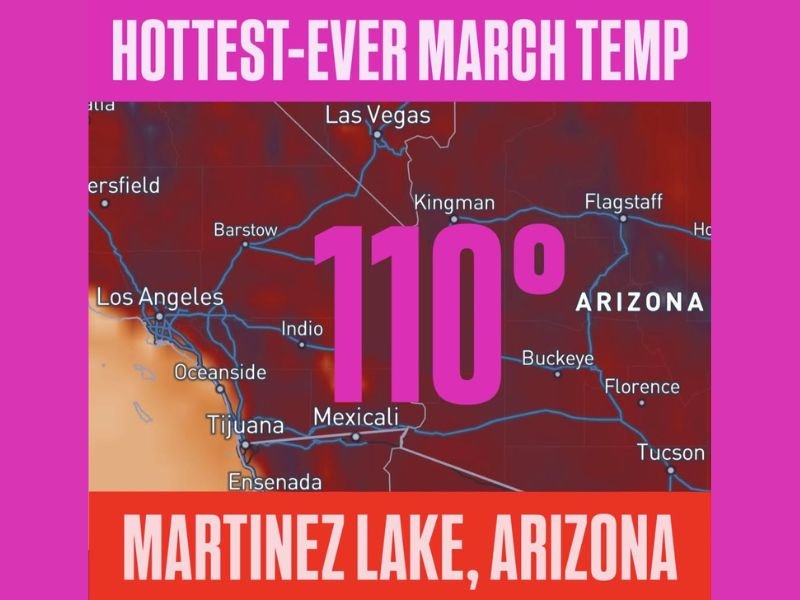
Arizona, California, Nevada and Southwest U.S. Hit Historic 110°F March Record in Martinez Lake as Extreme Heat Shatters Seasonal Norms
ARIZONA — A historic and alarming temperature milestone has been reached in the Southwest as Martinez Lake recorded a scorching 110°F, marking what is being reported as the hottest March temperature ever observed in the United States.
The record-breaking heat highlights the intensity of an ongoing early-season heat wave that is impacting Arizona, California, Nevada, and surrounding regions.
Historic 110°F Record Shocks Meteorologists
The temperature of 110°F recorded in Martinez Lake stands out as an extraordinary event for the month of March, a time when such extreme heat is virtually unheard of across the United States.
Meteorologists say this level of heat typically occurs deep into summer, making its arrival in early spring both unusual and concerning. The reading not only challenges historical norms but signals the strength of the current atmospheric pattern driving temperatures far above average. This milestone is being closely monitored as a potential benchmark event in U.S. climate records.
Heat Dome Driving Extreme Conditions Across the Southwest
The primary force behind this record-setting heat is a powerful heat dome parked over the Southwest. This system traps hot air beneath it, allowing temperatures to climb rapidly and remain elevated over multiple days.
Regions across Arizona, southern California, and Nevada are experiencing intense heat, with many areas seeing temperatures well above seasonal averages. Cities throughout the desert Southwest are facing prolonged exposure to dangerous heat levels.
Forecasters indicate that this heat dome has been unusually strong for March, contributing to the unprecedented nature of the temperature readings.
Unusual Timing Raises Concerns for Early Season Impacts
What makes this event particularly concerning is not just the intensity of the heat, but its timing. March is typically considered a transitional month between winter and spring, not a period for record-breaking summer-like extremes.
Such early-season heat can place additional stress on infrastructure, increase wildfire risk, and pose health concerns for residents unprepared for such conditions. It also raises questions about how upcoming months may unfold if this pattern persists or re-intensifies later in the season.
Surrounding States Also Feeling the Heat Surge
While Martinez Lake has captured national attention, the broader region is also experiencing significant temperature anomalies. Parts of California and Nevada are reporting unusually high readings, with some areas nearing or exceeding daily and monthly records.
This widespread heat event is not isolated, but part of a larger regional pattern affecting much of the Southwest. The combination of dry conditions and persistent high pressure is allowing temperatures to soar across multiple states simultaneously.
What Comes Next as Heat Pattern Evolves
Forecast models suggest that while the peak of the heat may begin to shift eastward in the coming days, above-average temperatures are expected to continue across large portions of the region.
There are also indications that similar heat patterns could redevelop in the near future, potentially bringing additional rounds of extreme temperatures.
Residents are urged to stay informed and take precautions as this unusual and intense heat event continues to evolve. For continued coverage and updates on this developing situation, visit SaludaStandard-Sentinel.com and share how the heat is impacting your area.