Honeybee Brain Navigation So Powerful That Engineers Have Now Copied It to Build Drones That Fly 600 Meters Home Without GPS or a Map
WASHINGTON, DC — The honeybee visiting flowers in your backyard is carrying something in its tiny brain that has stumped engineers for decades and is now being directly copied to solve one of the most expensive problems in modern drone technology. A landmark study published in the journal Nature on May 13, 2026 has revealed that the navigation system inside a honeybee’s brain is so extraordinarily efficient that researchers have replicated it to build drones capable of flying over 600 meters from home and returning precisely without GPS, without a stored map, and on a neural memory smaller than most email attachments.
What Honeybees Are Actually Doing in Their Brains
Most people understand that bees find flowers and return to their hive, but the mechanism behind this ability is what has left scientists genuinely astonished for years.
Bees can travel several kilometers from the hive to food sources and return home using visual landmarks, distance estimates, and memory. They do not need a huge brain or vast computing power. Instead, minimal neural circuits help them quickly decide whether to reject a flower or land on it safely.
Bees solve the navigation challenge by flying a short looping flight around the hive before they ever forage, registering what the area around home looks like from several angles. This brief learning flight gives them all the visual memory they need to return home successfully from long and winding foraging journeys.
Engineers Built a Drone That Does Exactly the Same Thing
Researchers led by Delft University of Technology in the Netherlands, in collaboration with Wageningen University and Carl von Ossietzky University of Oldenburg, spent years studying this bee navigation process before replicating it in a working drone system they named Bee-Nav.
Researchers at Delft University of Technology built a drone that finds its way home over more than 600 meters without GPS, without a stored map, and on a neural memory of just 42 kilobytes — smaller than most email signatures with a logo attached.
In Bee-Nav, the robot also first makes a short learning flight near home. During that flight it collects panoramic images of the environment. A small neural network then learns to process those images for estimating the direction and distance back home.
Why This Matters for the Future of Technology
Many future robots will need to navigate on their own even where GPS is unavailable. Most current systems do this by building detailed maps of the environment. But that requires a lot of computing power and memory, making such systems expensive and energy-hungry. Honeybees show that there may be a much more efficient solution.
In real-world indoor and outdoor experiments, a small drone successfully returned to within 0.5 meters of home for 100 percent of 30 to 110 meter flights and 70 percent of 200 to 600 meter flights.
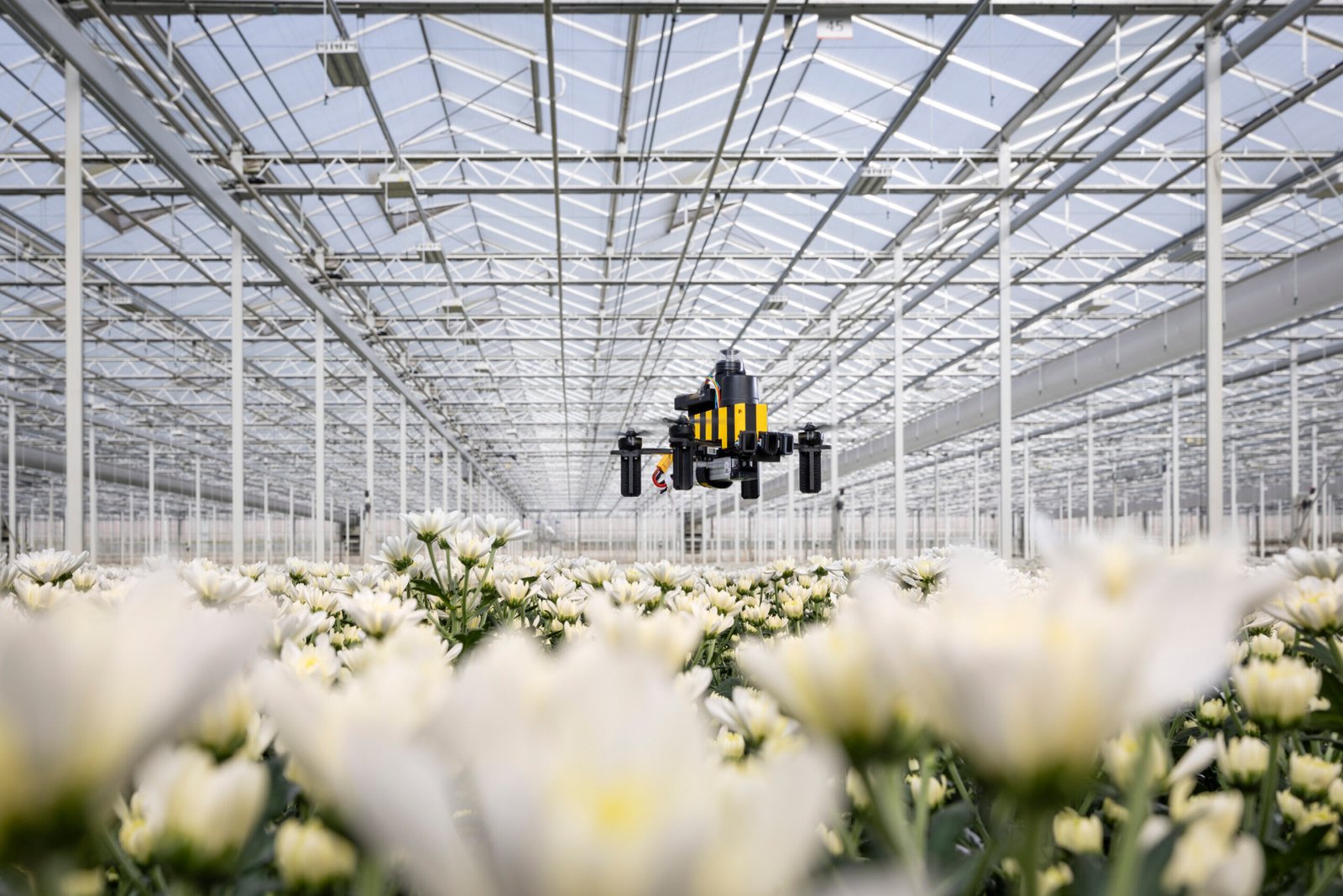
Bee-Nav enables lightweight, safe robots to navigate on their own, opening the door to applications such as butterfly-like drones monitoring greenhouses, delivering packages, and inspecting industrial sites.
What the Bee Has Known All Along
The honeybee has been navigating complex landscapes with pinpoint precision for millions of years using brain machinery so compact and efficient that the entire modern engineering world is now paying attention.
The research not only exemplifies an impressive engineering feat but also reminds us that sometimes the most advanced solutions are those quietly perfected in the natural world. By observing and emulating nature’s navigators like the honeybee, we can bring a new era of nimble and efficient robotics closer to reality.
The next time a honeybee lands near you, consider that the tiny creature hovering over a flower is running navigation software so advanced that the world’s leading engineering universities are only now beginning to understand how to replicate it.
For continuing coverage of wildlife science discoveries and their impact on technology across the United States, visit SaludaStandard-Sentinel.com.