Arizona Bald Eagles Defy Nature by Migrating North in Summer Instead of South Stunning Scientists and Rewriting Everything Known About Americas National Bird
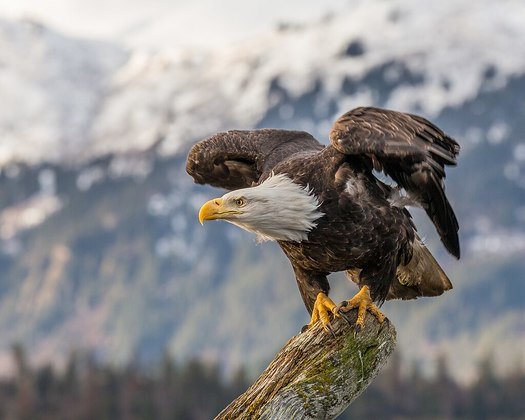
PHOENIX, AZ — Everything you were taught about bird migration may need a revision. A groundbreaking study published in the Journal of Raptor Research has revealed that bald eagles born and raised in Arizona are doing something that flies completely against one of nature’s most fundamental rules — instead of migrating south as temperatures rise, they head north into Canada and the northern United States every summer, baffling scientists and rewriting long-held assumptions about America’s national bird.
The Discovery That Stopped Researchers in Their Tracks
Scientists tracked 24 young bald eagles and two nonbreeding adults between 2017 and 2023 using satellite transmitters. They found that many eagles born in Arizona migrate north during summer and fall, traveling through the western United States and into southern Canada. This timing is unusual because Arizonian bald eagles nest in winter.
Arizona’s bald eagles migrate north after the breeding season during spring and summer, returning south just before the breeding season starts in the fall. This northward migration brings them to regions like southern Canada and the northern United States, with some birds traveling as far as California. The study found these eagles rely on two primary migration paths — one passing through Utah and Idaho and another cutting through Nevada and western Idaho.
Why Arizona Eagles Are Different From Every Other Population
The key to understanding this reverse migration lies in Arizona’s unique breeding calendar, which operates on a completely different seasonal schedule than virtually every other bald eagle population across North America.
Arizona bald eagles start nesting in the winter, so their non-breeding season actually falls in the summer and autumn. Lead author Dr. Caroline D. Cappello was intrigued by this different timing of seasonal movement and notes that northward migratory behavior raises interesting questions about the recent and historical pressures that shape these movement strategies.
Scientists suspect that these reverse migrations are a form of strategic wandering. Instead of holding a fixed territory, juvenile eagles act more like nomadic opportunists. They follow seasonal peaks in food availability even if that means traveling across multiple US states and Canadian provinces in a single loop.
Ancient Routes Still Being Used Today
One of the most remarkable findings from the six year tracking study involves the specific lakes and rivers these northward-migrating eagles choose as stopping points along their unusual routes.
The authors report that the tracked eagles paused at many of the same lakes and rivers that a study in the 1980s had already identified as important stopover sites for bald eagles, lending credence to the importance of these habitats for multiple generations of eagles across decades of use.
This suggests the northward migration route is not a recent behavioral shift but rather a long-established and multigenerational tradition specific to the Arizona bald eagle population that has simply gone largely unnoticed by the broader scientific community until now.
Eagles Get More Precise With Age
As bald eagles age they tend to calm down. Experienced adults usually lock onto territories with good nesting trees, steady prey, and safe roosting spots. Once paired, they invest energy in breeding rather than in long exploratory flights. The study suggests that many of the tracked youngsters gradually shorten their journeys and over time show more loyalty to certain areas particularly around Arizona in autumn.
Researchers are calling for closer attention to key travel corridors and stopover sites that eagles use year after year. By identifying high-use areas, conservation efforts can focus on making existing infrastructure safer and reducing hazards along these routes including electrocution risks from power lines and poisoning from contaminated prey.
For continuing coverage of bald eagle research and wildlife discoveries across the United States, visit SaludaStandard-Sentinel.com.