Peak Severe Weather Season Begins June 1 Across Colorado Wyoming Nebraska and Kansas With Damaging Winds Large Hail and Tornadoes as Primary Threats Through August
DENVER, CO — Peak severe weather season officially begins June 1, 2026 across Colorado, southeastern Wyoming, western Nebraska, and western Kansas, marking the start of the most climatologically active and dangerous three month window for thunderstorm, large hail, damaging wind, and tornado threats across the central and northern plains region as the severe weather focus shifts northward from the southern plains and Dixie Alley.
What Makes a Thunderstorm Severe
As severe weather season peaks across the region, understanding the official thresholds that define a severe thunderstorm is essential knowledge for every resident across the affected states.
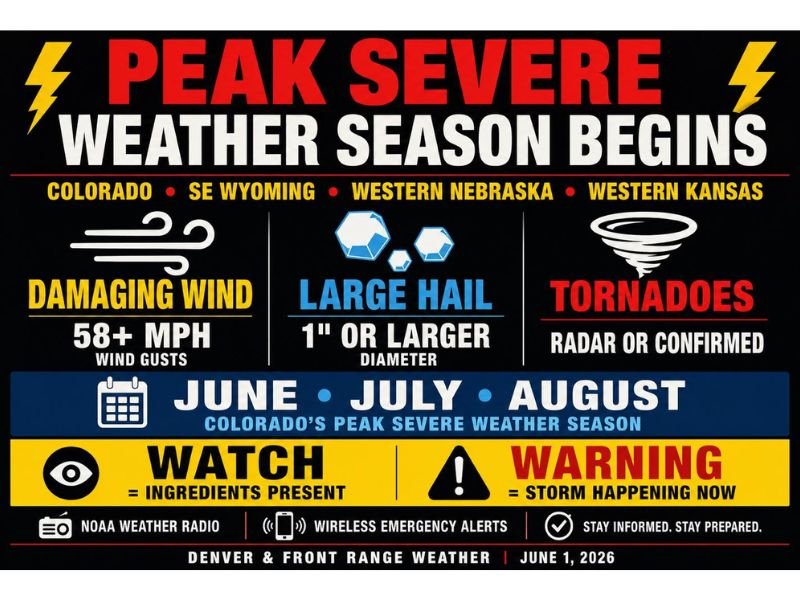
A thunderstorm is classified as severe when it produces wind gusts of 58 miles per hour or stronger, hail measuring at least one inch in diameter which is quarter size or larger, or a tornado either indicated by Doppler radar or confirmed visually by law enforcement, emergency management personnel, the public, or storm chasers in the field.
Watch Versus Warning Explained
Two of the most critical and frequently misunderstood terms in severe weather communication are the watch and the warning, and understanding the distinction between them can be genuinely life-saving during an active severe weather event.
A watch means the atmospheric ingredients are present for severe weather to develop across a broad area, signaling that residents should remain alert and have their safety plan ready. A warning means a severe storm is happening right now, either confirmed on radar or visually observed, requiring immediate protective action without delay from all residents in the warned area.
Tornado Sirens Are Not Enough
One of the most dangerous misconceptions about severe weather safety involves over-reliance on outdoor tornado sirens as a primary warning notification system.
Tornado sirens are designed as outdoor warning systems and are not engineered to penetrate interior walls, background noise, fans, televisions, or sleeping conditions inside homes, particularly during overnight severe weather events when residents may be deeply asleep. Residents are strongly urged to maintain a NOAA Weather Radio and ensure Wireless Emergency Alerts are enabled on all household mobile devices to guarantee warning reception regardless of time of day or indoor conditions.
June July and August Are Colorado’s Danger Months
The June through August window represents Colorado’s peak severe weather season, during which the combination of intense daytime heating, abundant moisture, and favorable wind shear creates the atmospheric environment most supportive of supercell thunderstorm development capable of producing all three severe weather hazards simultaneously across the Denver Front Range and surrounding plains region.
For continuing coverage of severe weather season preparedness and storm threats across the United States, visit SaludaStandard-Sentinel.com.