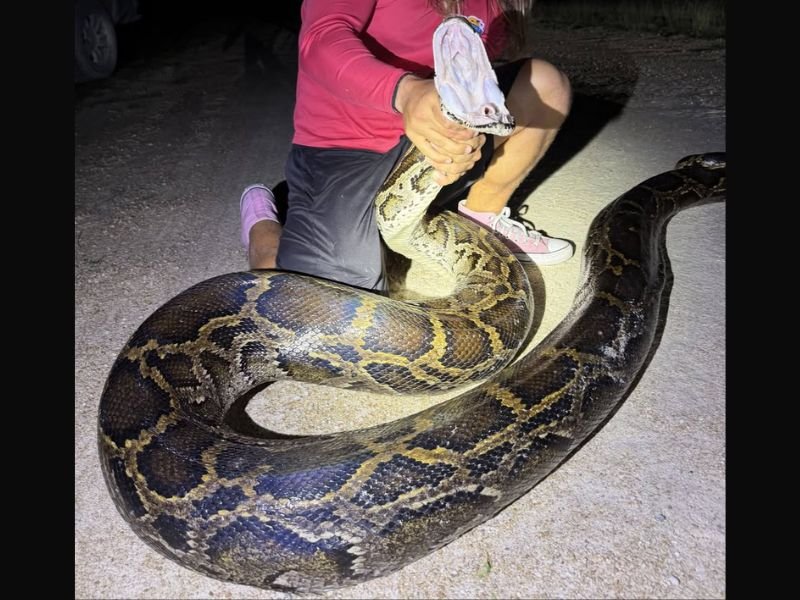
Nearly 18 Foot Burmese Python Captured in Florida Everglades Highlighting Growing Invasive Species Crisis Threatening Native Wildlife Across the Region
EVERGLADES, FL — A massive Burmese python measuring nearly 18 feet in length was recently captured in the Florida Everglades, drawing widespread attention to the ongoing and escalating invasive species problem that continues to pose a serious ecological threat to native wildlife throughout South Florida’s delicate ecosystem.
A Remarkable and Alarming Capture
The sheer size of this python places it among the largest specimens ever removed from the Everglades, underscoring just how established and deeply embedded the Burmese python population has become within this protected natural landscape.
Photographs from the capture show the enormous scale of the animal, with its body dwarfing the individuals present during the removal and coiling extensively across the ground, a visual demonstration of why these reptiles represent such a formidable challenge for wildlife managers and conservationists working in the region.
An Invasive Threat With No Natural Predators
Burmese pythons are not native to Florida and have no natural predators within the Everglades ecosystem, allowing populations to grow unchecked and spread across vast stretches of the national park and surrounding wetland habitats since first establishing themselves decades ago.
Originally introduced through the exotic pet trade, these snakes have adapted remarkably well to South Florida’s subtropical environment, thriving in the heat, water, and dense vegetation that the Everglades provides while consuming native mammals, birds, and reptiles at a rate that has measurably reduced populations of several once-common species.
Impact on Native Wildlife
Wildlife research conducted across the Everglades has documented dramatic population declines among native mammals including raccoons, opossums, and marsh rabbits in areas with high python density, reflecting the outsized predatory impact these large constrictors have on the surrounding food web.
The removal of large breeding females such as this nearly 18 foot specimen is considered particularly significant by wildlife officials, as a single large female is capable of producing dozens of eggs per clutch and contributing substantially to future population growth within the ecosystem.
Ongoing Removal Efforts Continue
Florida wildlife authorities and partnering organizations have maintained active python removal programs across the Everglades for several years, using trained removal teams and organized hunting initiatives to reduce the population and protect native species from further decline.
For continuing coverage of wildlife, environmental, and conservation news across the United States, visit SaludaStandard-Sentinel.com.