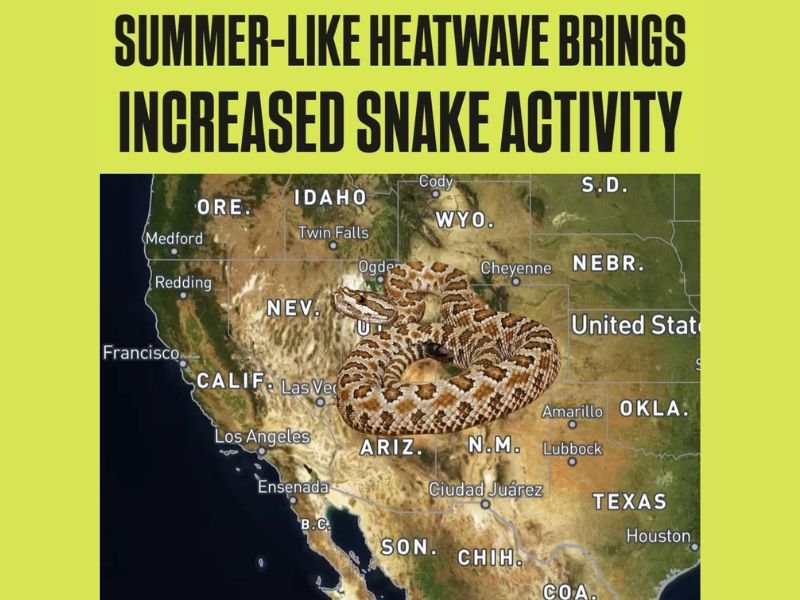
Arizona, New Mexico, Texas, Nevada and California See Surge in Rattlesnake Activity as Extreme Heatwave Spreads Across Southwest and Southern Plains
ARIZONA — A growing heatwave across the Southwest and Southern Plains is not only pushing temperatures higher but also triggering a noticeable rise in snake activity, particularly involving rattlesnakes across multiple states.
As temperatures climb to summer-like levels far earlier than normal, experts warn that encounters with snakes are becoming more frequent, especially in outdoor and hiking areas.
Heatwave Driving Increased Snake Activity Across the Region
The surge in snake activity is closely tied to the ongoing heatwave affecting Arizona, New Mexico, Texas, Nevada, and parts of California. Warmer ground temperatures encourage snakes to become more active as they search for food and regulate their body heat.
Rattlesnakes, which are commonly found across desert and semi-arid environments, are emerging more often and earlier in the season due to these elevated temperatures. This early spike in activity is unusual for this time of year and reflects the broader impact of the current heat pattern across the region.
Outdoor Safety Concerns Rise for Hikers and Residents
With increased snake movement, safety concerns are rising for those spending time outdoors. Trails, parks, and rural areas are considered higher-risk zones where encounters are more likely.
Experts recommend staying alert while hiking and avoiding distractions such as wearing headphones, which can reduce awareness of surroundings. Walking in the center of trails is also advised to minimize the chance of stepping near hidden snakes. Recent encounters reported by individuals highlight that these sightings are already occurring and may become more common in the coming days.
Why Early Season Heat Is Changing Wildlife Behavior
The intensity and timing of the heatwave are key factors behind this surge in snake activity. Typically, such levels of heat—and the resulting wildlife behavior—are seen later in spring or early summer.
However, with temperatures already reaching unusually high levels, ecosystems are responding earlier than expected. This shift is affecting not just snakes, but potentially other wildlife patterns across the Southwest. The combination of dry conditions and sustained warmth is creating an environment where animals are adapting quickly to changing conditions.
Multiple States Impacted as Heat Expands
The current weather pattern is not isolated to one area but is impacting a wide region stretching from California and Nevada through Arizona and New Mexico into Texas and parts of the Southern Plains.
As the heat dome continues to expand, additional areas could begin to see similar increases in snake activity. This makes the situation important for residents and travelers across multiple states to monitor closely.
Ongoing Heatwave Expected to Maintain Risk Levels
Forecasts suggest that above-average temperatures will continue across the Southwest in the coming days, meaning the risk of snake encounters is unlikely to decrease in the short term. As long as warm and dry conditions persist, snakes will remain active and visible, particularly during daytime and early evening hours.
Residents are encouraged to remain cautious and aware of their surroundings when outdoors. For more updates on developing weather conditions and their impacts, visit SaludaStandard-Sentinel.com and share what you’re seeing in your area.