Over 100 Million People Face Severe Weather Sunday From the Southern Appalachians to New England With Gusty Storms and Isolated Tornadoes Possible
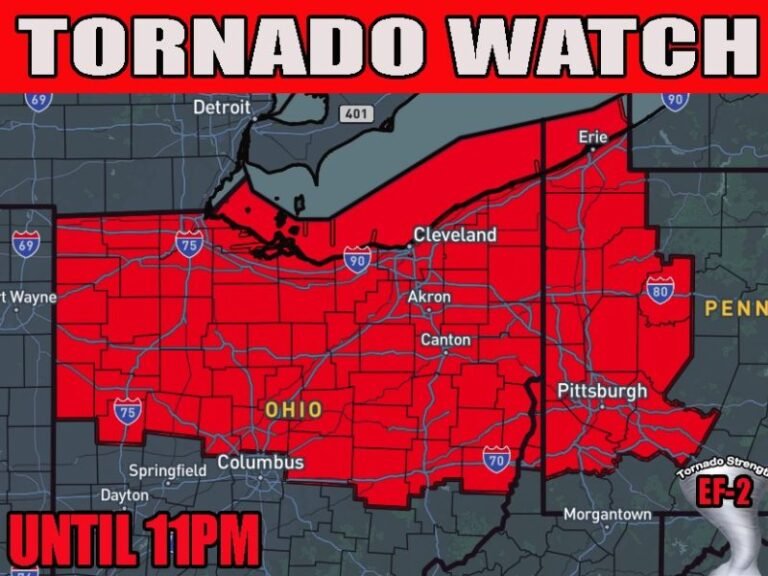
WASHINGTON, DC — More than 100 million people across the eastern United States are at risk of severe weather Sunday, June 14, as a Slight Risk of severe storms covers a massive corridor stretching from the Southern Appalachians through the Mid-Atlantic and into New England, with gusty storms likely in highly populated areas and isolated tornadoes possible along the Canadian border and from the southern Great Lakes to the Mid-Atlantic.
The Risk Zone Breakdown
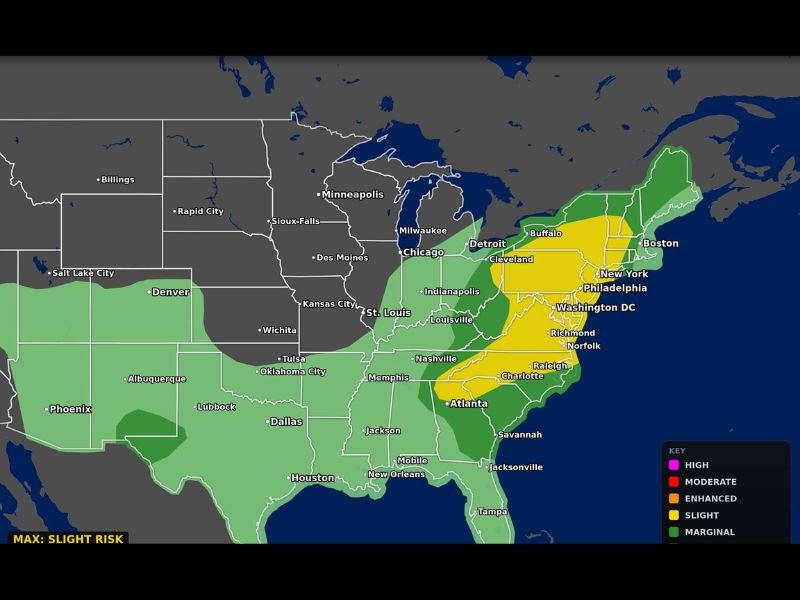
Max Velocity Weather categorical outlook updated June 14 at 2:18 a.m. ET places a Slight Risk, the second tier on the five-level scale, across a broad swath running from northern Georgia and the Carolinas through Virginia, the Mid-Atlantic, and into southern New England. This zone includes Atlanta, Charlotte, Raleigh, Richmond, Washington, Philadelphia, New York, and Boston — encompassing some of the most densely populated metro areas in the country.
A surrounding Marginal Risk zone extends across a much wider footprint, covering the Southern High Plains from Albuquerque and Lubbock through Dallas, the Ohio Valley, the Great Lakes region including Chicago and Detroit, and northern New England. The Thunder category, indicating organized convection below severe thresholds, reaches as far west as Denver and Salt Lake City.
Primary Hazards
Gusty storms represent the most widespread threat for Sunday afternoon across the highly populated Slight Risk corridor from the Southern Appalachians to New England. These storms are capable of producing damaging wind gusts in urban and suburban areas where impacts affect large numbers of people simultaneously.
Isolated tornadoes are an additional concern in two distinct zones: along the Canadian border in the northern tier of the country, and across a corridor stretching from the southern Great Lakes through the Mid-Atlantic region.
Southern High Plains Marginal Risk
A separate Marginal Risk area covers the Southern High Plains, where isolated instances of severe hail and damaging winds are possible. This zone is independent of the larger eastern threat and affects a different population center, including portions of New Mexico and West Texas.
What Residents Should Do
With over 100 million people in the affected zones, residents across the eastern United States should keep weather alerts active throughout Sunday afternoon and evening and have shelter plans ready given the population density involved. For continuing coverage of this widespread severe weather threat across the United States, visit SaludaStandard-Sentinel.com.