Florida Wildfire Crisis Hits 103,000 Acres Burned and 135 Active Fires Statewide in Worst Dry Season Since Early 2000s With Heat Wave and No Rain in the Forecast
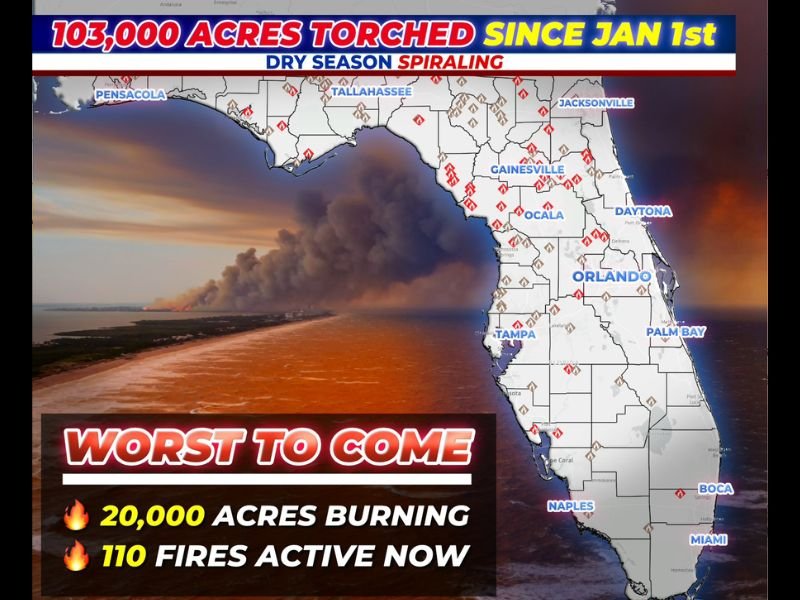
FLORIDA — Florida is facing a wildfire crisis that forecasters are describing as the worst in 20 years, with 135 active wildfires currently burning across the state and more than 103,000 acres torched since January 1. The situation spans the entire state from Pensacola and Tallahassee in the north through Gainesville, Orlando, Tampa, and all the way down to Naples and Miami in the south, making this one of the most widespread and dangerous wildfire events Florida has seen since the early 2000s.
With peak wildfire season running now through June and approximately five weeks remaining in the dry season, forecasters are warning that conditions are not improving. The risk is going up, not down.
By the Numbers: A Crisis Spreading Across the State
The scale of Florida’s current wildfire situation is alarming by any measure. Over 20,000 acres are actively burning right now across 135 separate fire locations mapped across the state. Since January 1, a total of 103,000 acres have already been consumed, placing this season on pace to rival the benchmark 1998 fire season, which remains one of the most destructive in Florida history.
Active fire icons on the statewide map are spread from the Panhandle through North Florida, Central Florida, and into South Florida, indicating that no region of the state is immune from the current wildfire threat.
Heat Wave Building Next Week Will Make Things Worse
Just as the wildfire situation demands relief, a heat wave is building for next week that will push conditions in the opposite direction. Highs are forecast to warm into the mid and upper 90s across Central and North Florida, including areas near Gainesville, Ocala, Orlando, and Tampa, with little to no rainfall in the forecast during that period.
The combination of extreme heat, continued dry conditions, and active fires already burning across the state creates a dangerous feedback loop that could allow existing fires to grow rapidly and new ignitions to spread quickly across dry vegetation.
Five Weeks Left in Dry Season With Risk Still Rising
Perhaps the most concerning aspect of the current situation is the timeline. Florida still has approximately five weeks remaining in its dry season, meaning the atmospheric conditions that have fueled this record-setting fire season are not going away anytime soon.
Forecasters are explicitly stating that the risk is not going down but going up as the heat wave arrives and rainfall remains absent from the forecast. Residents across all regions of Florida are being urged to avoid any outdoor burning, report smoke or fire immediately, and stay connected to local emergency alerts throughout the remainder of the dry season.
Are you in Florida and witnessing the ongoing wildfire situation in your area? Share what conditions look like in your community and stay informed with the latest coverage at SaludaStandard-Sentinel.com.