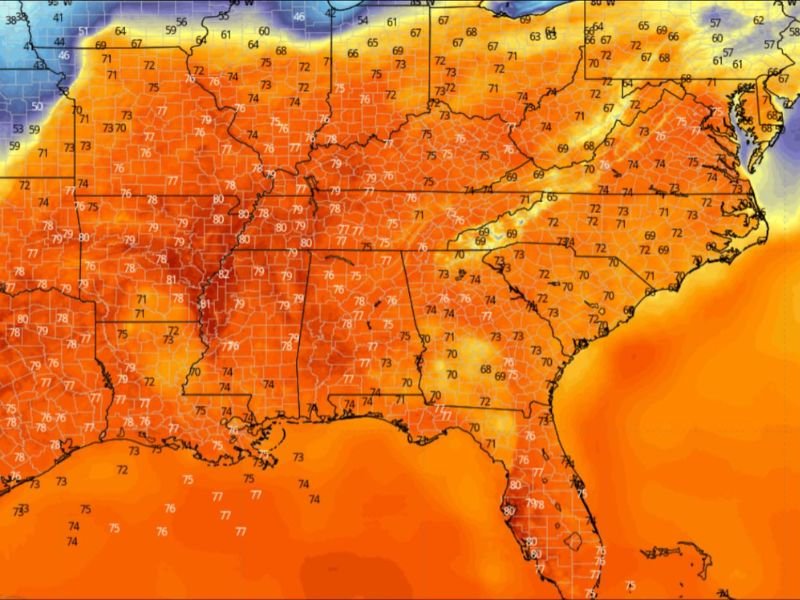
Gulf Coast States From Texas to Florida See Unseasonable 70s Heat and High Humidity Creating Sticky Conditions Across the South
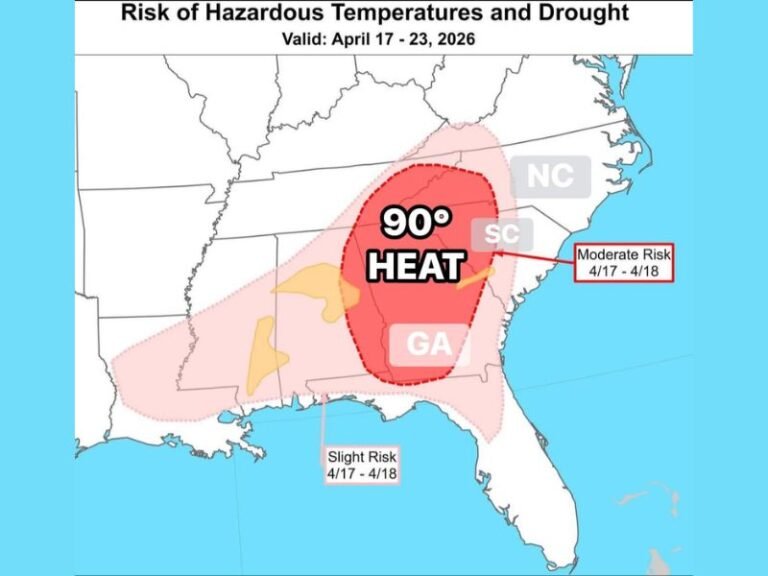
UNITED STATES — A surge of warm, moisture-rich air has spread across the Gulf Coast and much of the southeastern United States, bringing widespread temperatures in the 70s along with noticeably high humidity levels.
From Texas through Louisiana, Mississippi, Alabama, and into Florida and the Carolinas, conditions have turned unseasonably muggy, creating a sticky and uncomfortable atmosphere more typical of late spring or early summer.
Warm Temperatures Combine With High Humidity Across the Region
Temperature data shows much of the region sitting in the low to upper 70s, with some areas nearing 80 degrees. However, it is the humidity that is making conditions feel significantly warmer and heavier than the actual temperature readings.
The Gulf of Mexico is acting as a key moisture source, feeding humid air northward into inland states. This has led to widespread damp conditions where the air feels thick and difficult to escape, especially during the evening hours.
Gulf Coast to Southeast Feeling Early Season “Summer-Like” Conditions
States along the Gulf Coast—including Texas, Louisiana, Mississippi, Alabama, and Florida—are experiencing the most intense humidity levels. The warm air mass extends further northeast into Georgia, South Carolina, and North Carolina, where similar conditions are being observed.
Even during the nighttime hours, temperatures remain elevated, preventing much relief from the humidity. This creates an environment where surfaces stay damp and the air remains heavy well after sunset.
Moist Air Bringing Discomfort and Increased Outdoor Impact
The combination of warmth and moisture is not only uncomfortable but can also impact daily routines. Outdoor activities may feel more exhausting than usual, and even short periods outside can lead to noticeable discomfort due to the lack of dry air.
High humidity also contributes to increased insect activity, particularly in coastal and low-lying areas, where standing moisture and warm temperatures create ideal conditions.
Pattern Driven by Moist Gulf Air Flow
This weather pattern is being driven by persistent southerly flow pulling moisture inland from the Gulf. Without a strong cold front to push the humidity out, these conditions are expected to linger across the region.
The setup reflects a transitional period where spring patterns begin to shift toward more summer-like conditions across the southern United States.
Little Immediate Relief Expected
Forecast trends suggest that the humid air mass will remain in place for the near term, meaning continued muggy conditions are likely across the Gulf Coast and Southeast.
Residents are encouraged to stay hydrated and limit prolonged outdoor exposure during the warmest parts of the day, especially in areas where humidity remains highest.
If you’re feeling the heat and humidity in your area, share your experience with us at SaludaStandard-Sentinel.com and let others know how conditions are impacting your day.