North Carolina and Atlantic Coast Brace for 2026 Hurricane Season as Official Storm Names Released and Preparation Urged Ahead of Start
UNITED STATES — With the 2026 Atlantic hurricane season just weeks away, officials and weather experts are urging residents—especially along the North Carolina coast and across hurricane-prone regions—to begin preparations now as the official list of storm names has been released.
The reminder comes as forecasters stress that it only takes one storm to make a season dangerous, regardless of how active or quiet the overall forecast may appear.
2026 Hurricane Season Approaching Quickly
The Atlantic hurricane season officially begins on June 1, and with just over two months remaining, attention is turning toward readiness and awareness.
Experts emphasize that preparation should begin well before the first storm forms, as early planning can significantly reduce risks when a storm threatens. Coastal areas, including North Carolina, are among those that have historically experienced impacts from named storms on the rotating list.
Official 2026 Hurricane Names List Released
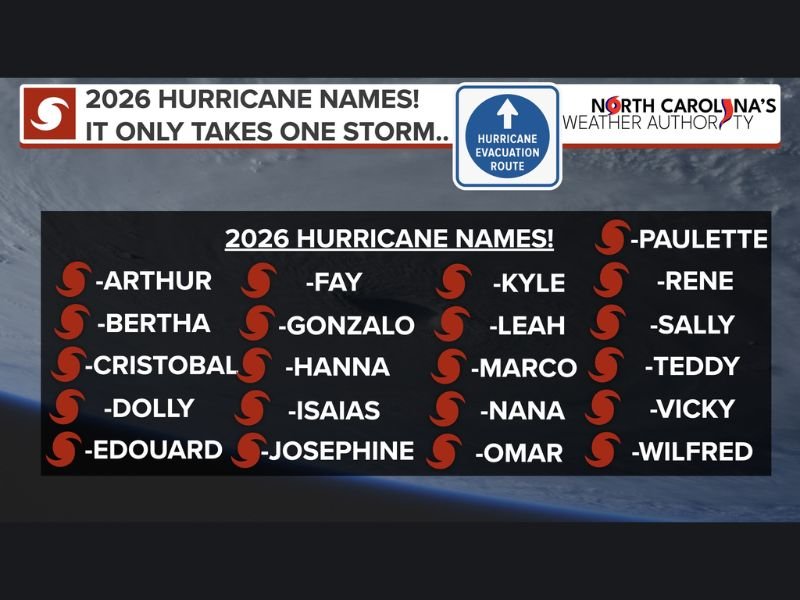
The list of names for the 2026 season has been confirmed, featuring a mix of familiar names that are reused every six years unless retired due to significant impacts.
Names for the upcoming season include Arthur, Bertha, Cristobal, Dolly, Edouard, Fay, Gonzalo, Hanna, Isaias, Josephine, Kyle, Leah, Marco, Nana, Omar, Paulette, Rene, Sally, Teddy, Vicky, and Wilfred.
Some of these names may be recognizable due to their association with past storms that affected parts of the United States.
North Carolina Among Regions Historically Impacted
North Carolina remains one of the states frequently impacted by tropical systems, making early preparation especially important for residents in coastal and inland areas.
While it is impossible to predict exactly which areas will be affected this year, past events show that even a single storm can cause widespread damage and disruption. This reinforces the importance of staying informed and ready ahead of the season.
Preparation Key Regardless of Seasonal Forecast
Officials stress that long-range forecasts can provide general expectations but do not determine the impact of individual storms. Even in less active seasons, a single storm making landfall can lead to significant consequences.
Residents are encouraged to review emergency plans, check supplies, and ensure they have reliable ways to receive weather alerts.
Early Awareness Can Make a Critical Difference
Preparing ahead of time allows individuals and communities to respond more effectively when a storm approaches. Simple steps such as reviewing evacuation routes, securing property, and understanding local risk levels can make a major difference.
As the season approaches, continued updates and preparedness information are expected to be shared to help residents stay ready. Stay informed and share your preparedness plans or concerns by visiting SaludaStandard-Sentinel.com.