Antarctica Records Brutal Minus 105 Degree Temperature Setting Coldest March Day Ever at Vostok Station
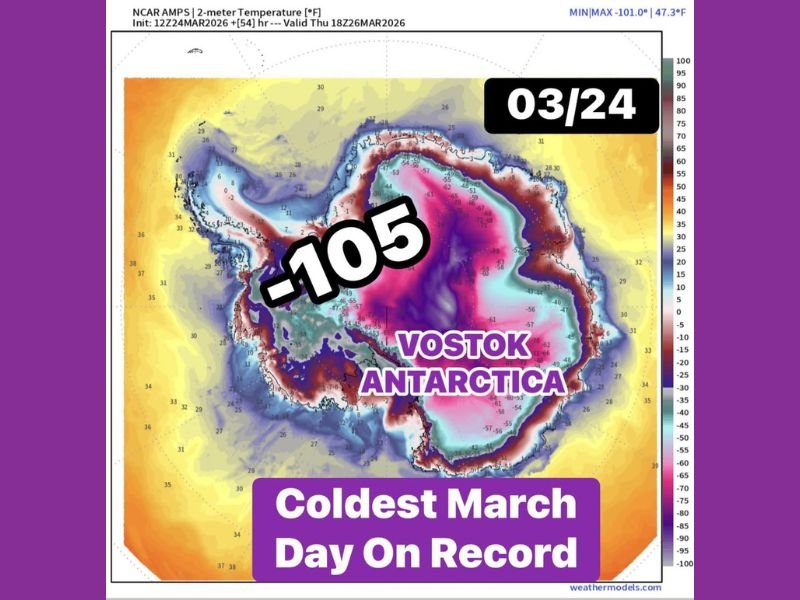
ANTARCTICA — A historic and extreme cold event has been recorded across the continent, with temperatures plunging to a staggering -105°F (-75°C), marking the coldest March day ever observed in Antarctica.
The brutal temperature was recorded near Vostok Station, one of the coldest places on Earth, highlighting just how severe the current cold surge has become across the region.
Record-Breaking Cold Grips Vostok Station
The latest data shows that temperatures dropped to -105°F, setting a new record for the coldest March reading ever documented on the continent. This level of cold is rare even for Antarctica, which is known for its extreme climate.
Vostok Station has long been associated with some of the most intense cold conditions on Earth. However, reaching this level during March—a transitional period toward autumn in the Southern Hemisphere—makes this event particularly notable. Scientists monitoring the region say such temperature extremes highlight how dynamic and unpredictable polar weather patterns can be.
How This Compares to Earth’s Coldest Temperature Ever Recorded
While -105°F is an extraordinary figure, it still falls short of the all-time coldest temperature ever recorded on Earth. That record stands at -128.6°F, also measured at Vostok Station on July 21, 1983.
Even so, the current reading ranks among the most extreme March conditions ever observed and underscores the intensity of the current cold wave. Events like this provide valuable data for understanding long-term climate variability in one of the most remote parts of the world.
Extreme Temperature Contrast Highlights Global Weather Swings
What makes this event even more striking is the contrast with recent extreme heat observed elsewhere. Just days earlier, parts of California recorded temperatures as high as 112°F.
This dramatic swing—from intense heat in one region to life-threatening cold in another—shows the wide range of weather extremes currently occurring across the planet. Such contrasts are not unusual on a global scale, but the magnitude of these differences within a short time frame is drawing attention.
Why Antarctica Experiences Such Severe Cold
Antarctica’s unique geography and atmospheric conditions contribute to its extreme temperatures. The continent sits at the South Pole, receiving limited sunlight during certain times of the year, while its high elevation and ice-covered surface help trap cold air.
Vostok Station, in particular, is located deep within the interior of the continent, far from moderating ocean influences. This allows temperatures to drop rapidly under clear skies and calm winds. These factors combine to create some of the harshest weather conditions on Earth, especially during the colder months.
What This Means for Climate Monitoring Going Forward
Extreme cold events like this are closely studied by scientists to better understand atmospheric patterns and long-term climate behavior. While a single event does not define broader climate trends, it does provide critical data for ongoing research.
Monitoring these extremes helps improve forecasting models and offers insights into how polar regions respond to shifting global conditions. Have thoughts on this extreme temperature event or how global weather patterns are changing? Share your perspective with others by visiting SaludaStandard-Sentinel.com.