United States Warm-Up Expands From Texas to Midwest While Michigan Trends Above Normal Into Early April With Arctic Cold Fading
UNITED STATES — A broad warming trend is taking hold across much of the country, with forecasts showing above-normal temperatures expanding from the Southwest through the Plains and into the Midwest as March transitions into April.
Meteorologists indicate that while northern Michigan may remain closer to seasonal averages, much of central and southern Michigan is expected to trend warmer than normal in the coming weeks.
Widespread Above-Normal Temperatures Stretch Across the U.S.
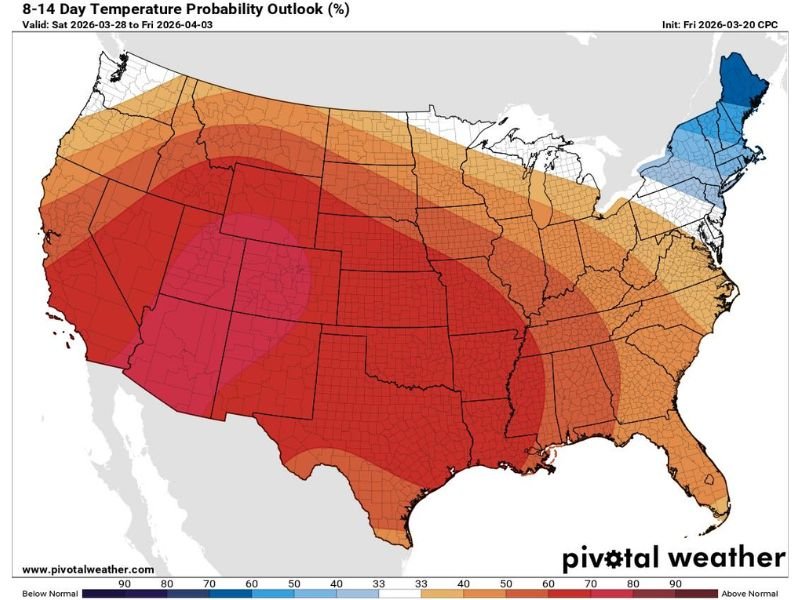
New long-range outlooks show a large portion of the United States experiencing above-average temperatures, particularly across Texas, the central Plains, and extending into parts of the Midwest.
The most significant warmth is concentrated from the southern Rockies through Oklahoma, Kansas, and into surrounding regions, where probabilities strongly favor sustained warmer conditions. This pattern reflects a broader shift away from winter-like weather as spring begins to take hold across the country.
Michigan Split Between Near-Normal North and Warmer South
In Michigan, the forecast shows a divide between northern and southern regions. Northern areas are expected to stay closer to normal for late March and early April, while central and southern parts of the state lean above average.
This means milder conditions will dominate much of the Lower Peninsula, with fewer cold intrusions compared to earlier in the season. The gradual warming trend is expected to help accelerate the transition into spring across the region.
Arctic Cold Snaps Becoming Less Likely
Forecasters suggest that the likelihood of significant Arctic cold outbreaks has diminished as the season progresses.
While brief cool spells are still possible—especially in a variable month like April—the overall pattern indicates a reduced chance of prolonged or intense cold snaps.
This shift is typical as the jet stream begins to retreat northward, allowing warmer air masses to dominate more consistently.
Northeast May See Pockets of Cooler Conditions
Not all areas will experience the same level of warmth. Parts of the Northeast, including sections of New England, may see temperatures closer to or even slightly below normal during this period.
These cooler pockets contrast with the broader national trend but are not expected to dominate the overall pattern. The variability highlights how regional weather differences can persist even within a warming trend.
Spring Transition Brings Gradual but Noticeable Change
The current outlook reflects a steady seasonal transition, with warmer conditions gradually spreading across the country and replacing winter’s lingering influence.
While surprises are always possible—especially in early spring—the general trend points toward milder weather and fewer extreme cold events moving forward.
Residents are encouraged to stay updated as forecasts evolve, particularly in regions where temperature swings can still occur. If you’re noticing warmer temperatures or changing seasonal patterns in your area, share your experience with us. Stay connected with SaludaStandard-Sentinel.com for continued coverage of national weather trends and forecasts.