Texas, Louisiana, Mississippi, Alabama, Georgia, Florida, Tennessee, And More See Early Hummingbird Migration Surge as Drought Raises Urgency for Feeders
OHIO — An early wave of hummingbird migration is already underway across parts of the Southeast and moving toward Ohio, with experts warning that this year’s unusually dry conditions could make backyard feeders more important than ever.
Reports indicate that ruby-throated hummingbirds are ahead of their typical seasonal schedule, prompting calls for residents—especially in northern Ohio—to prepare feeders weeks earlier than usual.
Migration Running Ahead of Schedule Across the Southeast
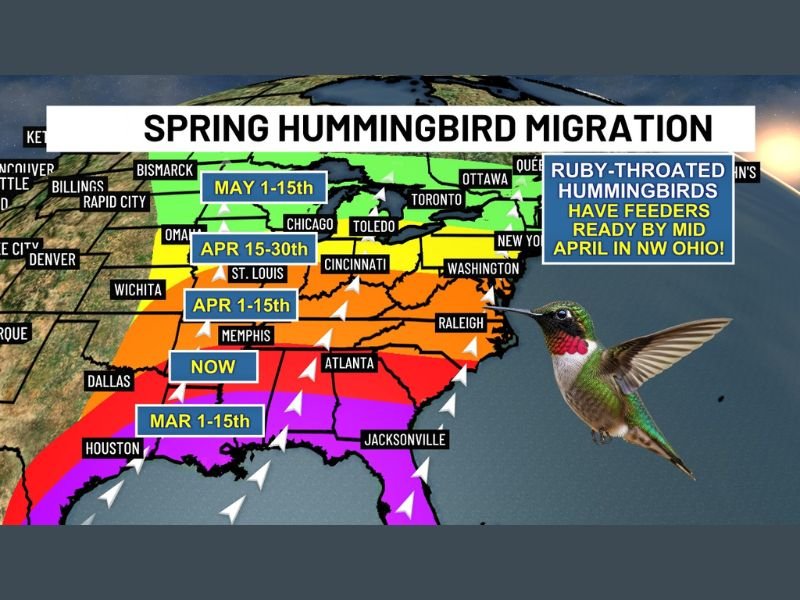
The current migration pattern shows hummingbirds already moving through southern states including Texas, Louisiana, Mississippi, Alabama, and Georgia. Areas along the Gulf Coast began seeing arrivals as early as March 1 through mid-March.
By now, birds are actively progressing through Tennessee and surrounding regions, with the migration expected to expand further north into Kentucky and the Carolinas in early April. This accelerated timeline suggests that favorable early-season conditions have allowed birds to begin their journey north sooner than expected.
Ohio and Midwest Expected to See Birds Soon
Forecast projections show that hummingbirds should reach southern portions of the Midwest—including Missouri, Illinois, and Indiana—between April 1 and April 15. Northern states, including Ohio, are expected to see arrivals between mid to late April.
In northern Ohio specifically, residents are being advised to have feeders ready within the next three weeks to support incoming birds as they continue their migration toward the Great Lakes and beyond. By early May, the migration is expected to extend into northern states such as Michigan, Wisconsin, and even parts of southern Canada.
Drought Conditions Increase Need for Feeders
One of the most concerning factors this year is the presence of severe drought conditions across parts of the United States, particularly in areas where hummingbirds depend on natural nectar sources.
With spring beginning under what some describe as the worst drought in decades in certain regions, flowering plants may not provide sufficient food for migrating birds.
This makes artificial feeders a crucial support system, especially in areas like Ohio and the Midwest where birds will rely on consistent food sources during their journey.
Why Timing Matters for Backyard Feeders
Experts emphasize that timing is critical when it comes to placing hummingbird feeders. Setting them out too late could mean missing the first wave of birds that arrive tired and in need of immediate nourishment.
For northern Ohio, mid-April is being highlighted as the ideal time to have feeders ready. In southern states, feeders should already be active as migration is currently underway.
Providing sugar water solutions can help sustain these birds during their long migration, especially in areas where natural food sources are limited due to dry conditions.
A Seasonal Shift Worth Watching Closely
The early migration pattern combined with ongoing drought conditions makes this year’s hummingbird season particularly unusual. It highlights how changing environmental conditions can impact wildlife behavior across multiple states.
Residents across Ohio, Tennessee, Georgia, the Carolinas, and surrounding regions are encouraged to monitor local conditions and take simple steps to support migrating birds. As this migration continues to unfold over the coming weeks, it remains a developing story for both weather watchers and wildlife enthusiasts.
For more updates on seasonal changes and regional developments, visit SaludaStandard-Sentinel.com and share what you’re seeing in your area as hummingbirds begin to arrive.