Strong Great Lakes Low Pressure Triggers Joint Aches Headaches and Sinus Pain as Atmospheric Pressure Swings Rapidly Thursday
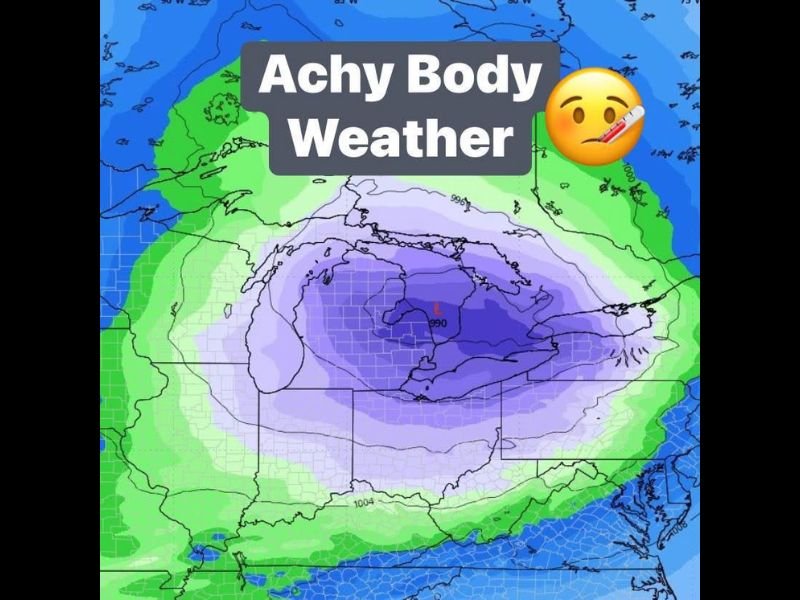
GREAT LAKES REGION — A powerful area of low pressure tracking through the Great Lakes is doing more than bringing clouds, gusty winds, and unsettled weather Thursday. The rapid swings in atmospheric pressure associated with this unusually strong system are being blamed for a wave of physical discomfort felt by residents across the region, from joint aches and headaches to sinus pressure and fatigue.
A November Storm in the Middle of June
What makes this system particularly notable is its intensity for mid-June. The low pressure center, more characteristic of a late fall storm than a summer weather pattern, is driving atmospheric pressure to drop and rise rapidly over a short period of time. This kind of dramatic pressure fluctuation is rarely seen during June across the Great Lakes and is the core driver behind the widespread physical symptoms being reported throughout the region Thursday.
How Falling Pressure Affects the Human Body
While the science connecting weather to physical symptoms is still being refined, a significant body of research and widespread anecdotal evidence supports the link. Rapidly falling barometric pressure can cause joint fluid and sinus cavities to expand slightly, triggering pain and inflammation in sensitive individuals. Those with arthritis, chronic migraines, sinus conditions, or general pressure sensitivity tend to feel these effects most acutely during fast-moving low pressure events like Thursday’s system.
Symptoms Residents Are Reporting
The combination of falling pressure, elevated humidity, gusty winds, and persistent cloud cover is producing a recognizable cluster of symptoms across the affected area. Joint aches and general body pain are among the most commonly reported complaints, along with headaches and full-blown migraines in those prone to pressure-triggered episodes. Increased sinus pressure and congestion are also widespread, and many residents are reporting an unusual level of fatigue and general feeling of being run down despite no illness present.
What to Expect as the System Moves Through
Conditions are expected to gradually improve as the low pressure system exits the region and atmospheric pressure begins to stabilize. Residents experiencing significant discomfort are encouraged to stay hydrated, rest, and consult a healthcare provider if symptoms persist or worsen beyond the passage of the storm system.
For continuing coverage of weather impacts and regional storm analysis across the United States, visit SaludaStandard-Sentinel.com.