Ruby-Throated Hummingbirds Begin Spring Migration North From Texas and Florida Toward the Carolinas and Midwest
SOUTH CAROLINA — The first wave of ruby-throated hummingbirds is beginning its annual journey back to the United States, with early sightings already reported in Florida, along the Gulf Coast and in parts of south Texas. After spending the winter in Mexico and Central America, the tiny migratory birds are now pushing northward, signaling that spring migration season is officially underway.
Early Sightings Across the Gulf Coast
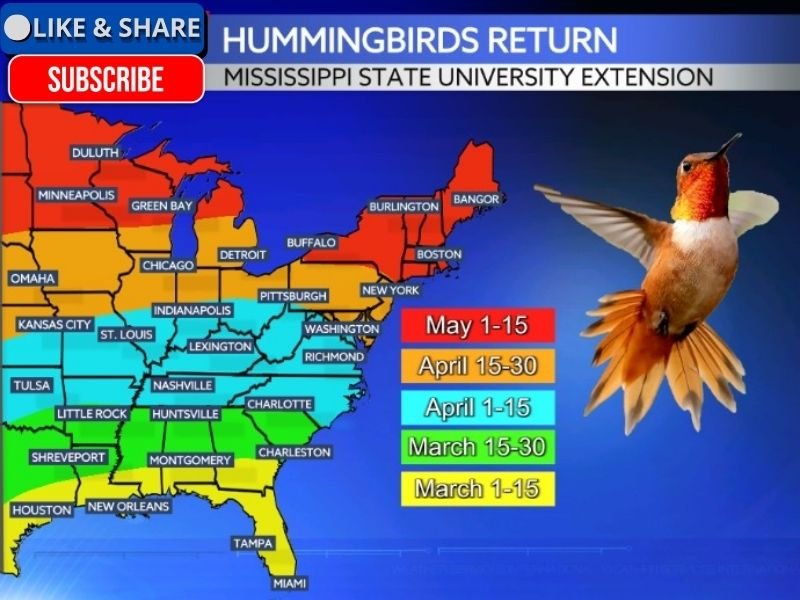
According to average migration dates provided by the Mississippi State University Extension, ruby-throated hummingbirds typically begin appearing along the Gulf Coast between March 1 and March 15.
States including Texas, Louisiana, Mississippi, Alabama and Florida often see the first arrivals. These early migrants take advantage of warming temperatures and blooming plants as they move inland. The latest migration map shows the gradual northward progression expected over the coming weeks .
Carolinas Expected Mid-to-Late March
For the Carolinas, the most common arrival window is between March 15 and March 30, though isolated birds can appear earlier if conditions are favorable.
As temperatures continue to moderate, hummingbirds are expected to become more prevalent across South Carolina and North Carolina by late March. Homeowners who maintain feeders are encouraged to clean and refill them ahead of peak arrival times to support the birds during their long journey.
Migration Spreads North Through April and May
By early April, hummingbirds typically spread into Tennessee, Kentucky and parts of the Midwest. From April 15 to April 30, arrival dates expand into states such as Illinois, Indiana, Ohio, Pennsylvania and portions of the Northeast. Northern states including Minnesota, Wisconsin, Michigan and parts of New England often see arrivals between May 1 and May 15, marking the final stretch of the spring migration push.
A Seasonal Sign of Spring
The ruby-throated hummingbird is the only hummingbird species that breeds in the eastern United States, making its return each year a reliable sign of changing seasons. Experts note that while average dates provide guidance, actual arrival times can vary depending on weather patterns, cold fronts and available food sources along the migration path.
For South Carolina residents, the coming weeks will likely bring more frequent sightings in gardens, parks and backyard feeders. If you spot your first hummingbird of the season, share your sighting and photos with us at SaludaStandard-Sentinel.com. Community reports help track how spring is unfolding across our region.