Pollen Levels Expected to Surge Across Parts of the U.S. This Week as Cedar, Elm, and Juniper Trees Trigger Moderate to Extreme Allergy Conditions
UNITED STATES — Allergy sufferers may need to prepare for worsening conditions this week as pollen levels are expected to spike sharply, with forecasts showing levels climbing from moderate today to extreme by Friday.
Weather conditions combined with seasonal tree pollination are creating the perfect environment for heavy pollen concentrations, particularly from cedar, elm, and juniper trees.
Pollen Levels Set to Increase Rapidly Through the Week
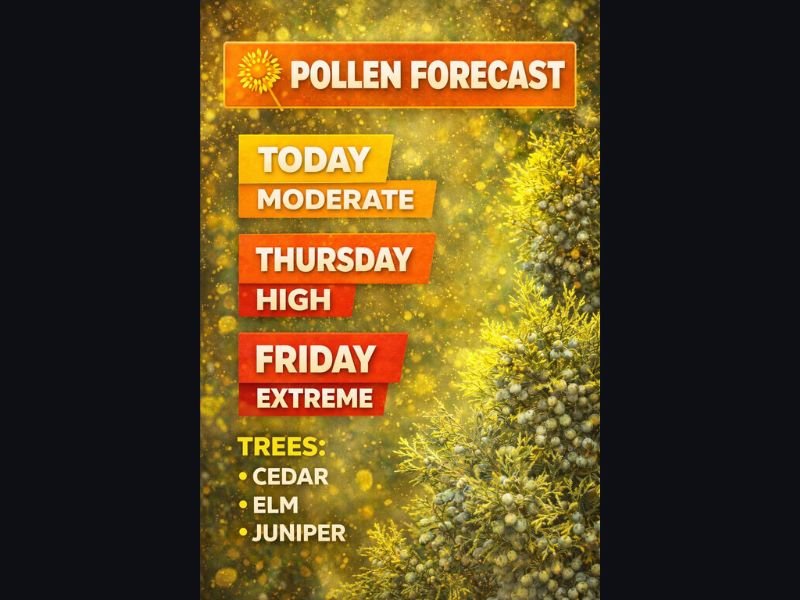
According to the forecast graphic, pollen levels will intensify steadily over the next few days. Today’s conditions are expected to remain moderate, but forecasters warn that the situation will escalate quickly as the week progresses.
By Thursday, pollen levels are forecast to reach high concentrations, and by Friday, they are expected to surge to extreme levels, which can trigger severe allergy symptoms for sensitive individuals.
Health experts say this type of rapid pollen buildup is common during early spring when trees begin releasing large amounts of pollen into the air.
Southwest Winds Carrying Pollen From the Deep South
Meteorologists say breezy southwest winds are helping transport pollen from southern regions northward, adding to the already increasing local pollen production.
At the same time, trees in many areas are entering peak pollination phases. Species such as cedar, elm, and juniper are among the main contributors to airborne pollen during this time of year. When winds carry pollen long distances, it can significantly raise allergy risks even in areas where those trees are not heavily present locally.
Why Cedar, Elm, and Juniper Pollen Can Be Especially Problematic
Tree pollen is one of the most common seasonal allergens. Cedar, elm, and juniper trees release extremely fine pollen particles that easily travel through the air. Because these particles are so small, they can travel miles and quickly enter homes, vehicles, and workplaces.
Common symptoms triggered by high pollen levels include:
- Sneezing and nasal congestion
- Itchy or watery eyes
- Scratchy throat and coughing
- Increased asthma flare-ups
For people with severe allergies or respiratory conditions, extreme pollen levels can significantly worsen symptoms.
Experts Recommend Taking Preventative Measures Now
Health specialists advise people who suffer from seasonal allergies to begin preventative treatments before pollen levels peak.
This can include starting allergy medications early, keeping windows closed during windy conditions, and limiting outdoor activities during peak pollen hours. Using air purifiers indoors and washing clothing after spending time outside can also help reduce exposure to pollen particles.
As pollen levels reach extreme levels later this week, even people who normally experience mild symptoms may notice stronger reactions. Allergy season can affect millions of Americans each year, especially during the spring months when trees begin releasing pollen across large regions.
Do seasonal allergies affect you during this time of year? Share your experiences and tips with other readers by joining the conversation at SaludaStandard-Sentinel.com.