Michigan Bald Eagle Population Surges With Over 900 Breeding Pairs and Widespread Sightings Across Upper and Lower Peninsula
MICHIGAN — Bald eagle populations across Michigan are continuing a strong upward trend, with sightings increasing statewide and an estimated 900 breeding pairs now established.
Wildlife experts say the resurgence marks a major success story for conservation efforts, as the species continues to expand across both the Upper and Lower Peninsula.
Once-Endangered Species Makes Strong Comeback
Bald eagles, once listed as an endangered species in the United States, have made a dramatic recovery over the past two decades.
In Michigan, the population has steadily grown thanks to environmental protections, habitat restoration, and reduced use of harmful chemicals that previously threatened the species.
The increase in breeding pairs reflects long-term stability and continued growth in eagle populations.
Sightings Reported Across Both Peninsulas
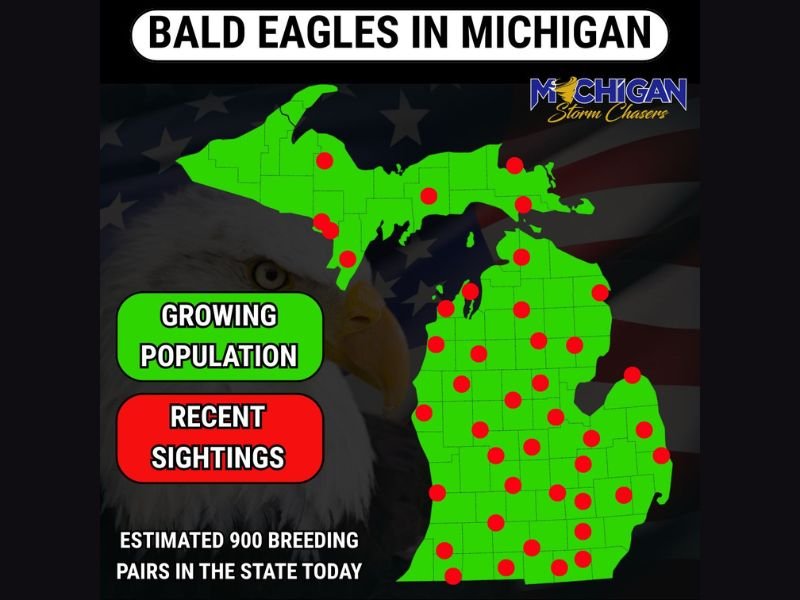
Recent reports show bald eagle sightings occurring across a wide portion of Michigan, including northern, central, and southern regions.
From the Upper Peninsula to cities and rural areas in the Lower Peninsula, residents are increasingly encountering these birds in their natural habitats.
The widespread distribution highlights how well the species has adapted and expanded across the state.
Estimated 900 Breeding Pairs Signal Healthy Population
Wildlife estimates suggest there are now around 900 active breeding pairs in Michigan, a significant milestone for the species.
Breeding pairs are a key indicator of long-term population health, as they show that eagles are not only present but successfully reproducing.
This growth suggests that Michigan provides a favorable environment for nesting and raising young eagles.
Ideal Habitat Supporting Continued Growth
Michigan’s abundance of lakes, rivers, and forested areas creates ideal conditions for bald eagles to thrive.
These birds rely on access to water for food sources such as fish, as well as tall trees for nesting.
As habitats remain stable and protected, experts expect the population to continue expanding in the coming years.
Conservation Efforts Continue to Play Key Role
Ongoing conservation and monitoring efforts remain important to ensure the long-term success of bald eagles in Michigan.
Officials continue to track population trends, protect nesting areas, and educate the public about maintaining safe distances from wildlife.
The recovery of bald eagles stands as one of the most notable conservation achievements in recent history.
If you’ve spotted a bald eagle in your area or noticed wildlife changes, share your experience with us. Stay connected with SaludaStandard-Sentinel.com for more updates on wildlife and environmental developments across the United States.