Indiana Weather Divide Emerges as Northern Region Stays Calm While Central Areas Face Higher Storm Concerns and Southern Counties Track Changing Conditions
INDIANA — A noticeable weather divide is setting up across the state, with conditions varying sharply between northern, central, and southern regions as shifting patterns create different storm impacts.
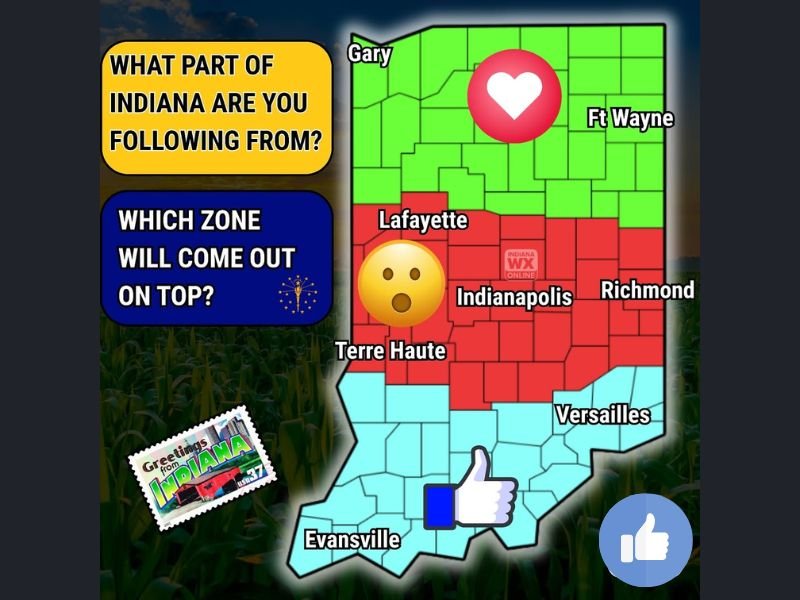
The latest outlook highlights a split across Indiana, where northern counties are expected to remain relatively calm, while central portions of the state face higher chances of active weather. Southern Indiana, meanwhile, sits in a transitional zone where conditions could change quickly.
Northern Indiana Remains in More Stable Zone
Areas across northern Indiana, including regions near Gary and Fort Wayne, are currently positioned in a more stable weather pattern. This zone is expected to see fewer storm impacts compared to the rest of the state.
The calmer conditions are likely due to less atmospheric instability in the northern tier, which reduces the potential for strong storm development. While isolated showers cannot be ruled out, widespread severe activity appears unlikely in this part of Indiana. This relative stability provides a contrast to the more active zones further south.
Central Indiana Faces Greater Storm Concerns
Central Indiana, including cities such as Indianapolis, Lafayette, and Terre Haute, is positioned within a more active weather zone. This area is expected to see increased chances of storms compared to other parts of the state.
The setup suggests that atmospheric conditions here are more supportive of storm development, which could lead to periods of unsettled weather. Residents in this region should be prepared for changing conditions, especially during peak heating hours when storms are more likely to intensify. This central zone stands out as the primary area to monitor for potential impacts.
Southern Indiana Sits in Transition Zone
Southern parts of the state, including Evansville and Versailles, fall into a transitional weather zone where conditions may shift between calm and active patterns.
This region could see fluctuations depending on how the broader system evolves, with some areas experiencing periods of quieter weather while others may see storms develop. The variability makes forecasting more challenging, as small changes in the system’s track could significantly impact conditions across southern counties.
Clear Statewide Split Highlights Changing Spring Pattern
The overall setup across Indiana reflects a classic springtime pattern, where different parts of the state experience varying levels of weather activity at the same time.
Such divisions are common during transitional seasons, when warmer air masses interact with lingering cooler air across the region. This creates distinct zones of stability and instability across relatively short distances.
Residents across Indiana are encouraged to stay aware of local forecasts, as conditions can vary significantly depending on location. If you’re seeing different weather conditions in your part of Indiana, share your experience and join the conversation at SaludaStandard-Sentinel.com.