Arctic Blast Forecast to Send Temperatures 15–35 Degrees Below Normal Across Texas, Oklahoma, Iowa, Ohio, Tennessee, Georgia, and New York Next Weekend
UNITED STATES — A powerful Arctic surge is projected to sweep into Texas, Oklahoma, Iowa, Ohio, Tennessee, Georgia, New York, and surrounding regions next weekend, delivering some of the coldest temperatures of the season. Long-range forecast data shows the potential for widespread anomalies of 15 to 35 degrees below normal, affecting much of the Midwest, Great Lakes, and Eastern U.S.
Models Show Deep, Widespread Cold Extending South and East
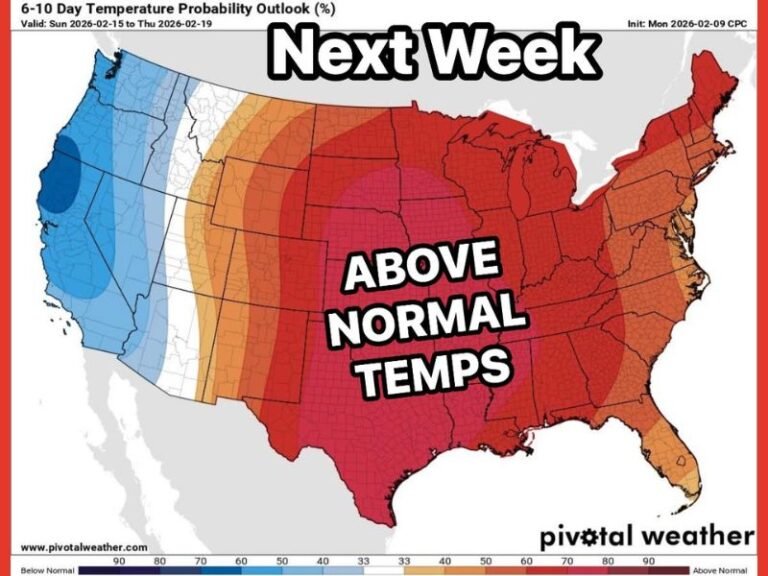
Meteorologists tracking the incoming pattern warn that a broad dome of Arctic air is poised to spill southward into the central United States before expanding eastward. Forecast maps display a large swath of dark blue and purple shading, highlighting areas where temperatures could fall dramatically below seasonal averages.
States including Iowa, Ohio, and Tennessee appear to be positioned near the core of the coldest air, with projected anomalies approaching 30–35 degrees below normal in localized pockets. Meanwhile, states farther south—such as Texas, Oklahoma, and Georgia—are still expected to experience a pronounced chill, with anomalies in the 15–25 degree range.
This type of setup typically favors sharply colder mornings, potentially driving overnight lows into the teens and low 20s across broad sections of the country.
Significant Impacts Possible for the Midwest, Great Lakes, and Eastern U.S.
The arrival of the Arctic air mass could deliver the most intense cold many regions have seen since last winter. Early projections suggest that states such as New York, Pennsylvania, Ohio, and Michigan may experience prolonged stretches of below-freezing temperatures.
For the Southern Plains and Southeast, the cold is expected to be shorter-lived but still impactful. Areas including northern Texas, central Oklahoma, and northern Georgia could see morning lows far below typical December values. Wind chills may also fall into single-digit territory in some higher-elevation or exposed locations.
Forecasters emphasize that while exact temperature outcomes will shift as the event approaches, confidence is growing in a significant early-winter cold outbreak affecting millions.
Residents Encouraged to Prepare for Early-Season Freeze Conditions
With temperature anomalies this large, residents across all impacted states should begin considering basic winter preparations. This includes protecting sensitive plants, insulating exposed pipes, and ensuring that heating systems are functioning properly before the coldest air arrives.
The potential Arctic blast also raises concerns for livestock protection and travel disruptions, especially in regions where freezing temperatures are not normally expected in early December.
Have you begun preparing for next weekend’s cold snap? Share your updates and stay informed as the forecast evolves at SaludaStandard-Sentinel.com.