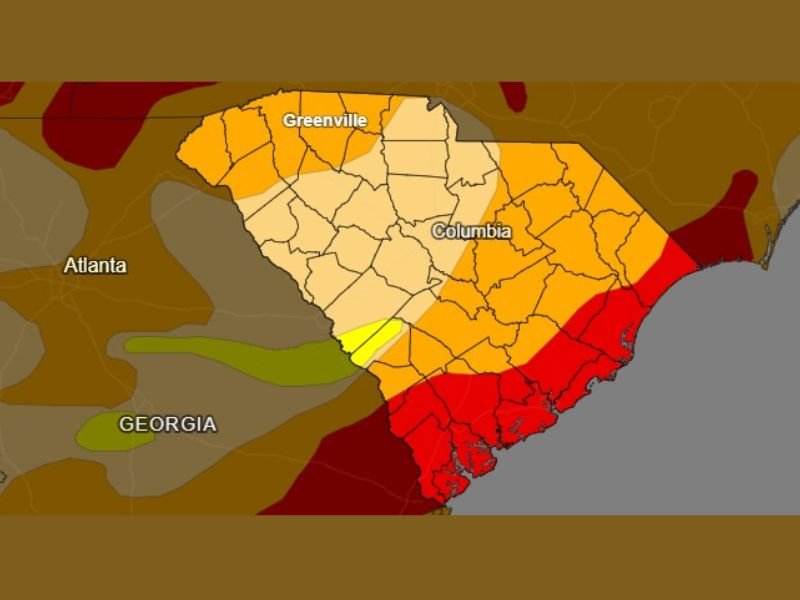
South Carolina Drought Improves to Level 1 and 2 Across Interior After Record Dry January Through April but Coastal Areas Remain in Severe Level 3 Drought
COLUMBIA, SC — South Carolina’s first full drought update following recent rainfall brings welcome but partial relief across the state, with interior and Upstate communities seeing drought conditions improve to Level 1 and Level 2 designations after May rains put a significant dent in what was the driest January through April period on record since 1895, while coastal communities across the southeastern corner of the state remain locked in a stubborn and serious Level 3 drought that the recent rainfall has not yet adequately addressed.
Record Dry Start to 2026 Created the Crisis
The severity of South Carolina’s current drought situation cannot be fully appreciated without understanding the extraordinary precipitation deficit that built up across the state during the first four months of 2026, which produced the driest January through April period in the entire 131 year instrumental record dating back to 1895.
Total precipitation across the state during that January through April window reached only 7.03 inches, representing a staggering decrease of 8.32 inches below the historical normal for that period and creating soil moisture deficits, streamflow reductions, and groundwater impacts of a severity rarely seen across South Carolina in the modern observational record.
May Rains Made a Significant Difference Inland
The rainfall that moved through South Carolina during May delivered meaningful drought relief across the interior and Upstate portions of the state, with the drought monitor reflecting this improvement by downgrading conditions from the more severe categories that had covered much of the state to Level 1 moderate drought and Level 2 severe drought across the Greenville, Columbia, and surrounding inland corridors.
Drought monitor imagery shows the lightest shading indicating the most improved conditions concentrated across the central interior of the state near Columbia and extending toward the Upstate Greenville corridor, with a small area of near-normal conditions visible in the southwestern corner of the state where the most beneficial rainfall accumulations occurred during the May precipitation events.
Coastal South Carolina Still Suffering Severely
Despite the inland improvement, the southeastern coastal corner of South Carolina including the Myrtle Beach and Grand Strand region, Lowcountry communities, and areas approaching the Georgia border remain under Level 3 extreme drought conditions depicted in deep red on the drought monitor map.
These coastal communities received inadequate rainfall during May’s beneficial precipitation events and continue carrying the full weight of the historic January through April precipitation deficit without meaningful relief, requiring additional rounds of above normal rainfall before drought conditions can be meaningfully downgraded across the southeastern coastal zone.
For continuing coverage of drought conditions and precipitation updates across the United States, visit SaludaStandard-Sentinel.com.