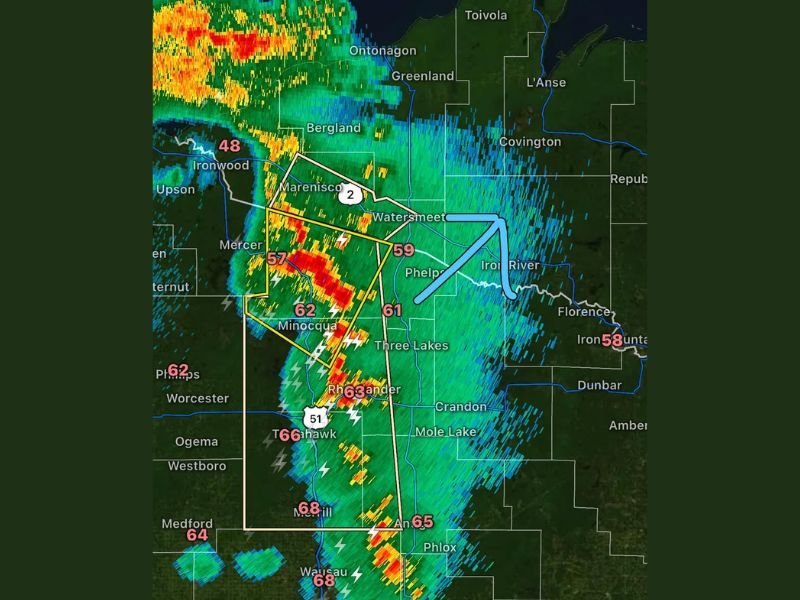
Strong Gusty Storm Enters Upper Peninsula of Michigan at 1 AM Tracking Toward Watersmeet and Iron River With Active Warning Polygons Covering Minocqua and Rhinelander Corridors
IRONWOOD, MI — A strong and gusty storm system is entering the upper peninsula of Michigan during the early morning hours, tracked at 1:00 AM as it pushes northeast across the Wisconsin and Michigan border region. Active severe weather warning polygons cover a broad zone stretching from Marenisco and Watersmeet in the upper peninsula southward through Minocqua, Three Lakes, Rhinelander, and Tomahawk in northern Wisconsin as the storm complex continues its northeast progression through the overnight hours.
Strong Gusty Storm Enters Upper Peninsula Tracking Toward Watersmeet and Iron River
Radar imagery shows intense red and orange reflectivity returns concentrated within the active warning polygons across the Wisconsin and Michigan border zone, with the storm’s most intense core positioned near and south of Watersmeet as it moves northeast toward Iron River and the broader upper peninsula of Michigan. The storm’s arrival in the upper peninsula during the overnight hours brings gusty winds and lightning activity to a sparsely populated but geographically significant region along the Highway 2 corridor.
The blue directional arrow on radar tracking indicates the storm’s northeast movement toward the Iron River area, with communities along and north of Highway 2 in the upper peninsula facing the most immediate threat as the storm crosses into Michigan from the Wisconsin border region.
Active Warning Polygons Cover Minocqua Rhinelander and Tomahawk in Northern Wisconsin
Multiple active warning polygons outlined in yellow and tan on radar maps cover a large zone across northern Wisconsin, encompassing communities including Minocqua, Three Lakes, Rhinelander, Tomahawk, and Merrill. These warning areas reflect the ongoing severe potential of the storm complex as it moves through the northern Wisconsin lake country during the overnight hours, with lightning activity visible across multiple warning zones simultaneously.
Temperature readings across the region range from the upper 50s to upper 60s, consistent with an unstable late spring overnight airmass capable of sustaining active thunderstorm development as the storm complex pushes northeast through the area.
Residents Across the Warning Zone Urged to Remain Weather Aware Overnight
All residents across the active warning polygons covering northern Wisconsin and the western upper peninsula of Michigan are urged to remain weather aware through the overnight hours as this strong and potentially severe storm system continues its northeast track. The overnight timing of this event means many residents may be asleep as the storms arrive, making multiple active weather alert notification methods particularly important for communities across the Minocqua, Rhinelander, Watersmeet, and Iron River corridors.
Anyone in the warning zone is encouraged to have a weather alert radio or mobile notification system active through the overnight period until the storm complex fully clears the region.
For continuing coverage of overnight storm tracking and severe weather warnings across the United States, visit SaludaStandard-Sentinel.com.