Climate Prediction Center Issues Moderate Excessive Heat Risk for West Texas by Mid Next Week With Triple Digit Heat Index Values Expected Across the Region
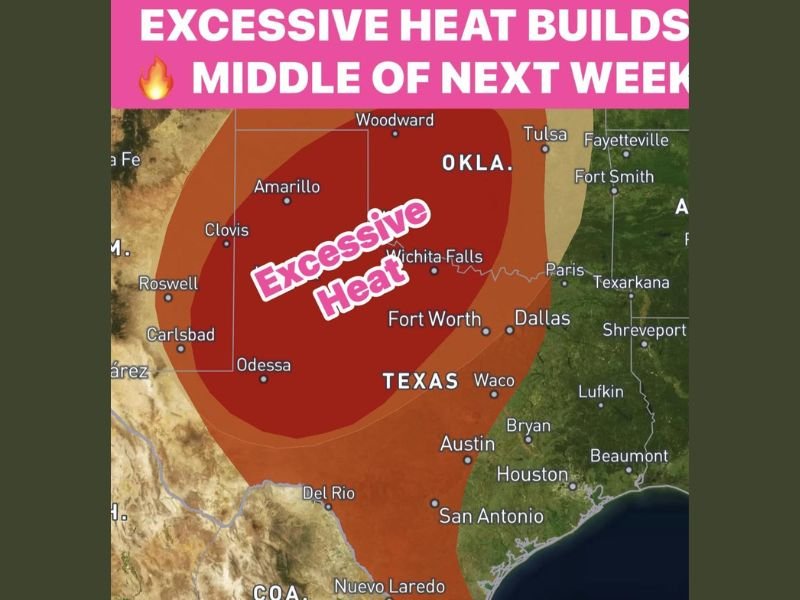
TEXAS — The Climate Prediction Center has issued a moderate risk for excessive heat to build over West Texas by the middle of next week, with a slight risk also in place for North Texas. Combined with elevated humidity levels, the heat index is forecast to climb into triple digit territory across impacted areas, raising serious public health concerns for residents throughout the region.
West Texas Faces the Greatest Heat Threat Next Week
The core of the excessive heat risk is centered over West Texas, covering a broad zone that includes Wichita Falls, Fort Worth, Odessa, and surrounding communities. This moderate risk designation indicates a high likelihood of dangerous heat conditions developing across the region by mid-week, with temperatures expected to combine with humidity to push the heat index to life-threatening levels.
North Texas Under Slight Risk as Heat Spreads Eastward
A slight risk for excessive heat extends into North Texas, covering areas including Dallas, Amarillo, and Waco. While the threat level is lower compared to West Texas, residents across the northern zones should still prepare for significantly above normal temperatures and oppressive heat index values throughout the mid-week period.
Freeze Conditions Tonight Before Extreme Heat Arrives Next Week
In a striking weather contrast, freeze conditions are expected tonight across the Texas Panhandle, with snow forecast for Dalhart before temperatures rebound sharply over the coming days. This dramatic swing from freezing overnight conditions to excessive heat building within a week highlights an unusually volatile weather pattern currently gripping the state.
Residents Urged to Prepare for Dangerous Heat Conditions
Residents across West and North Texas are urged to prepare now for the arriving heat event by staying hydrated, limiting outdoor activity during peak afternoon hours, and checking on vulnerable neighbors and family members. For continuing coverage of severe weather events across the United States, visit SaludaStandard-Sentinel.com.