Massive Ice Jam on Susquehanna River in Luzerne County, Pennsylvania Forces Towering “Ice Mountains” as Pressure Sends Slabs Skyward
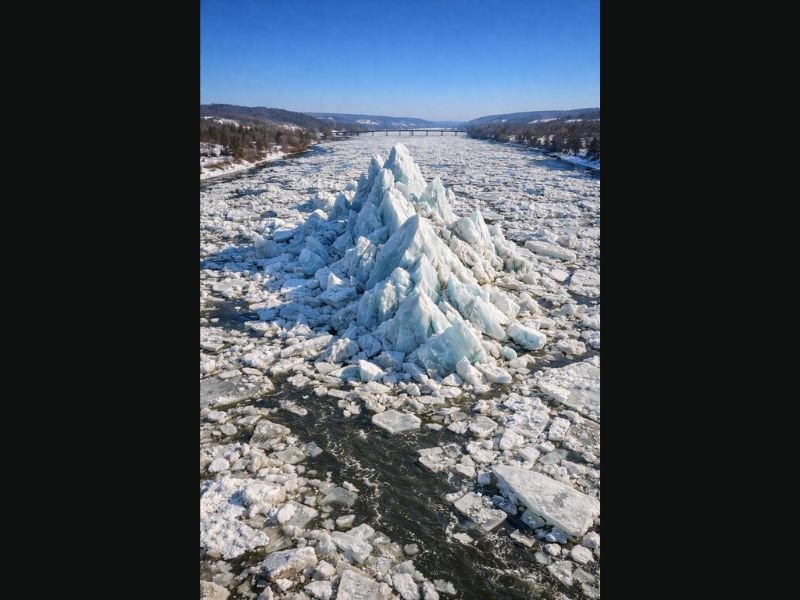
LUZERNE COUNTY, PENNSYLVANIA — Rare and dramatic “ice mountains” have formed along the Susquehanna River after a massive ice jam built intense pressure beneath the frozen surface, forcing slabs of ice upward into towering formations.
Officials and observers say the phenomenon occurred when moving ice along the river became clogged, creating a jam that trapped water and pressure underneath. As the pressure increased, large sections of ice were driven vertically, erupting into jagged mounds that in some places rival the height of a single-story building.
How the Ice Mountains Formed
Ice jam structures develop when broken river ice accumulates and blocks the natural downstream flow. As water continues pushing beneath the jam, pressure builds rapidly.
In this case, that pressure had nowhere to escape. Instead of spreading outward, it forced thick slabs of ice straight upward, stacking and splintering into sharp, towering ridges. The result resembles frozen peaks rising abruptly from the river’s surface.
Meteorologists describe this as a powerful release of river energy — not just a freeze, but a vertical surge created by mechanical force.
A Rare and Powerful Winter Phenomenon
While ice jams are not uncommon during winter thaws and refreezes, formations of this scale are rare. The mounds appear almost sculpted, with layers of broken ice tilted at sharp angles.
Some structures reportedly stand as tall as a small building, a reminder of the immense force moving water can generate even in freezing conditions.
The Susquehanna River has experienced ice jams in the past, but the dramatic upward thrust seen in this event highlights how quickly conditions can change when temperatures fluctuate.
Potential Risks and Ongoing Monitoring
Ice jams can pose flooding risks as water backs up behind the blockage. When a jam suddenly releases, downstream areas may experience rapid rises in river levels.
Local authorities are typically cautious during such events, monitoring river flow and warning nearby communities if water levels begin to climb. Residents along riverbanks are often advised to remain alert for shifting ice and changing conditions.
The sight may appear breathtaking, but experts emphasize that unstable ice formations can be dangerous. Cracks and collapses can occur without warning.
Nature’s Power on Full Display
What makes this event so striking is not just the size of the ice formations, but the physics behind them. The river didn’t simply freeze in place — it rose upward under intense pressure.
For many who witnessed the scene, it was a dramatic reminder of winter’s raw strength. The frozen peaks now stand as temporary monuments to the powerful interaction between flowing water and subfreezing air.
Have you ever seen ice formations like this in your area? Share your experiences and photos with us at SaludaStandard-Sentinel.com.