Florida Drought Crisis Deepens as 100% of State Falls Into Dry Conditions and 43% Reaches Extreme to Exceptional Levels
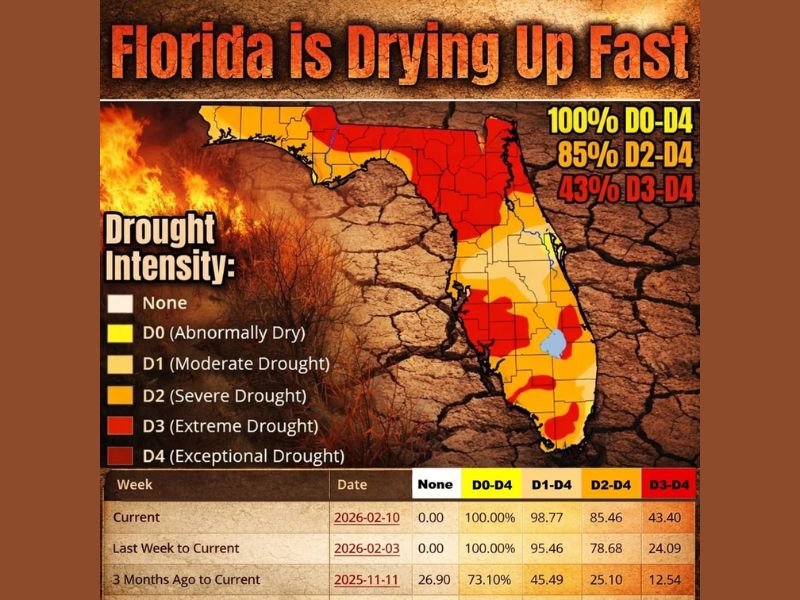
FLORIDA — Drought conditions across the state have intensified sharply, with new data showing that 100% of Florida is now experiencing some level of drought or abnormal dryness, and nearly half the state has slipped into extreme categories.
The latest update paints a troubling picture as rainfall deficits continue to grow and soil moisture levels drop across much of the peninsula and Panhandle.
Entire State Now Impacted by Drought
Current figures indicate:
- 100% of Florida is classified D0–D4 (abnormally dry through exceptional drought)
- 85% of the state is in D2–D4 (severe to exceptional drought)
- 43% is now in D3–D4 (extreme to exceptional drought)
Just one week earlier, the percentage of the state in extreme categories was significantly lower. The rapid jump underscores how quickly conditions have deteriorated. Three months ago, nearly 27% of the state was drought-free. That number has now fallen to zero.
Northern Florida Hit Hardest
The most severe impacts appear concentrated across northern Florida and portions of the central peninsula, where large areas are now shaded in deep red — indicating extreme (D3) to exceptional (D4) drought.
Southern portions of the state remain in moderate to severe drought categories, though the footprint of higher-end classifications is expanding.
Agriculture and Wildfire Concerns Grow
With rainfall scarce and temperatures fluctuating, concerns are mounting about:
- Agricultural stress and crop losses
- Increased wildfire risk
- Lower reservoir and groundwater levels
- Strain on local water supplies
Dry vegetation combined with gusty conditions could elevate fire danger across vulnerable regions.
Rapid Escalation in Just Weeks
Comparing recent data shows a notable increase in higher-level drought classifications in a short period. Severe (D2) conditions expanded dramatically week-over-week, while extreme (D3) areas nearly doubled. The trend suggests that without significant rainfall in the coming weeks, drought conditions could intensify further before meaningful improvement occurs.
Rainfall Needed to Reverse Trend
Forecasters say it would likely take multiple widespread rain events — not just isolated showers — to significantly reduce drought intensity. Until then, residents across Florida may continue to see worsening dry conditions.
Water conservation efforts may become increasingly important if the pattern persists. Stay with SaludaStandard-Sentinel.com for continued updates on Florida’s developing drought situation and its impacts statewide.