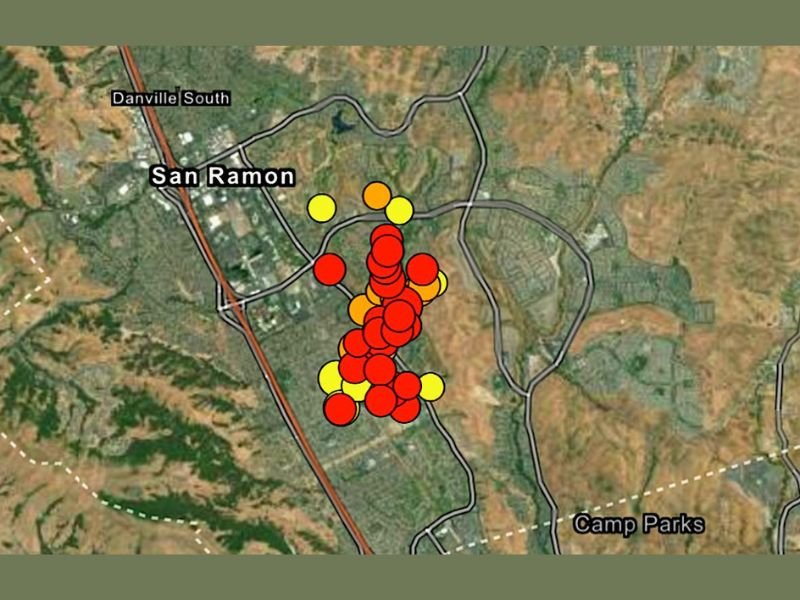
California Earthquake Swarm Hits San Ramon Area With 24 Quakes in Under an Hour, Strongest at Magnitude 4.2
CALIFORNIA — A fast-moving earthquake swarm rippled through the San Ramon area in less than an hour, with 24 separate quakes reported in a tight cluster near neighborhoods and everyday community routes rather than offshore or in a remote region. The strongest reported shaking in the burst reached magnitude 4.2 at an estimated depth of about 5 miles, shallow enough for many residents to feel it clearly.
What Happened in the San Ramon Area
The activity is being described as a swarm because it wasn’t one isolated quake followed by a simple aftershock sequence. Instead, the map shows repeated events stacking closely together along the same small zone—multiple dots packed into a narrow corridor near San Ramon and surrounding areas. That pattern often signals stress releasing in quick pulses rather than in a single main “headline” event.
Residents in nearby communities may have noticed repeated jolts or a rolling sensation, especially because shallow quakes tend to transmit sharper shaking at the surface than deeper events of similar magnitude.
Why a Magnitude 4.2 at 5 Miles Deep Can Feel Strong
A magnitude 4.2 is not typically considered a major, damage-producing earthquake on its own. But the reported depth—around 5 miles—matters. Shallow quakes can feel louder and more abrupt because the energy has less distance to travel before reaching the surface. That means even moderate shaking can be widely noticed, particularly in homes, offices, and buildings where small movements are amplified.
When you combine that with a swarm—multiple quakes within minutes—the experience can feel more intense than a single brief jolt.
What a Swarm Usually Means and What Comes Next
Earthquake swarms can last minutes, hours, or sometimes longer depending on how the stress is being released. In many cases, the sequence gradually tapers down. However, it’s also possible for swarms to continue with additional small quakes, or for one event to stand out as the strongest after several smaller ones occur first.
The key point is that a swarm does not automatically mean a larger quake is guaranteed. It does mean the area is actively adjusting, and residents may continue feeling periodic shaking while the sequence settles.
What Residents Should Do If Shaking Continues
If additional quakes occur, the safest action remains the same: Drop, Cover, and Hold On—get low, take cover under a sturdy table if possible, and stay away from windows. After any shaking, check for hazards such as broken glass, fallen objects, or the smell of gas, and avoid using open flames if you suspect a leak.
People in the affected area may also want to secure loose items on shelves, keep phones charged, and have shoes and a flashlight nearby at night—small steps that reduce injury risk during repeated shaking.
Bottom Line
A concentrated burst of 24 earthquakes near San Ramon—including a shallow magnitude 4.2—is a reminder that California’s fault zones can release energy quickly and close to where people live. The most likely outcome is that the swarm gradually fades, but residents should remain alert for additional small quakes in the same area.
Did you feel the shaking in the San Ramon region—or hear from family and friends who did? Share what you experienced and follow ongoing updates at SaludaStandard-Sentinel.com.