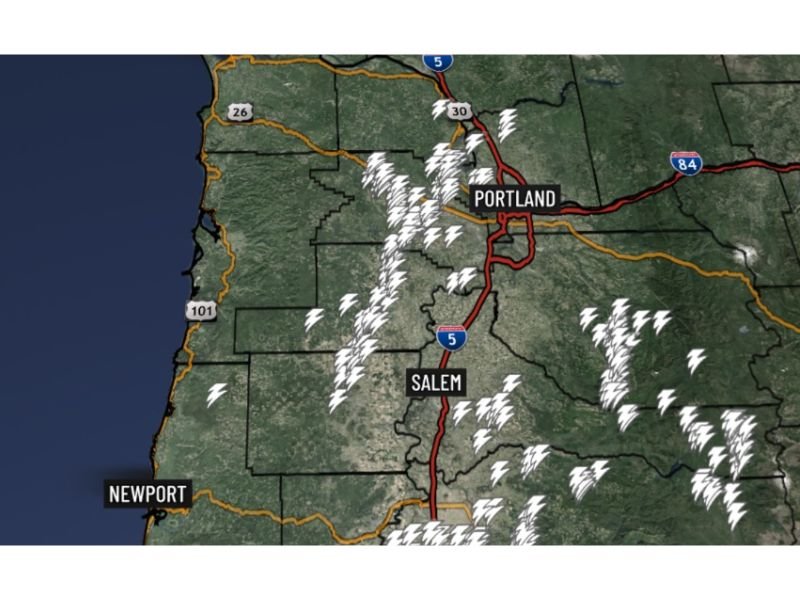
Washington and Oregon See 196 Lightning Strikes in 24 Hours as Late-Night Storm Activity Intensifies Around Portland and Chehalis
WASHINGTON AND OREGON — A surge of storm activity brought a significant burst of lightning across parts of the Pacific Northwest late Friday, with nearly 200 strikes recorded within a 24-hour period as conditions intensified overnight.
The lightning activity, tracked around areas including Portland, Hillsboro, Corvallis, and Chehalis, highlights a growing pattern of unstable weather moving through the region, particularly during late evening hours around 10:45 PM.
Lightning Activity Spikes Across Key Cities
Data shows a total of 196 lightning strikes recorded over the past 24 hours, signaling a notable uptick in storm intensity across both Washington and Oregon. The strikes were scattered across a wide area, with clusters forming near major population centers.
Communities such as Portland and surrounding suburbs saw repeated electrical activity, while areas further north like Chehalis also experienced heightened storm conditions. This widespread distribution suggests a dynamic storm system affecting multiple regions simultaneously.
Late-Night Storms Raise Safety Concerns
The timing of the storms—peaking late Friday night—adds an additional layer of concern for residents. Lightning occurring during nighttime hours can be more dangerous due to reduced visibility and the likelihood of people being unprepared.
Officials typically warn that even a single lightning strike can pose serious risks, including power outages, fires, or injuries. With nearly 200 strikes recorded, the cumulative threat becomes more significant, especially in areas with ongoing outdoor activity or travel.
Storm Pattern Indicates Unstable Atmosphere
The presence of frequent lightning suggests an unstable atmosphere capable of supporting continued storm development. While no widespread severe damage has been confirmed, the electrical activity alone points to strong upward motion within storm clouds.
Meteorological patterns like this often occur when moisture and atmospheric instability combine, leading to repeated bursts of thunderstorm development over a short period.
Areas Most Impacted Across the Region
The storm system appeared to stretch from western Oregon into parts of western Washington, with the highest concentration of lightning strikes occurring near urban corridors and along major highways.
Cities including Corvallis, Lebanon, Hillsboro, and Portland were all within the active zone, while northern areas such as Chehalis also remained under the influence of the storm system.
Residents in these areas likely experienced brief heavy showers, thunder, and flashes of lightning throughout the night as the system moved through.
Residents Urged to Stay Alert During Storm Activity
Even though the storms may be scattered, lightning remains one of the most dangerous weather hazards. Residents are encouraged to take precautions during active storms, including staying indoors and avoiding open areas.
With additional instability possible, similar storm activity cannot be ruled out in the near term. Monitoring local conditions and staying weather-aware will remain important for communities across both states.
If you witnessed lightning or experienced storm impacts in your area, share your story with us at SaludaStandard-Sentinel.com and help others stay informed.