Unseasonably Warm Temperatures Set For Philadelphia, Washington, Cleveland and Boston As January Heatwave Builds Next Week
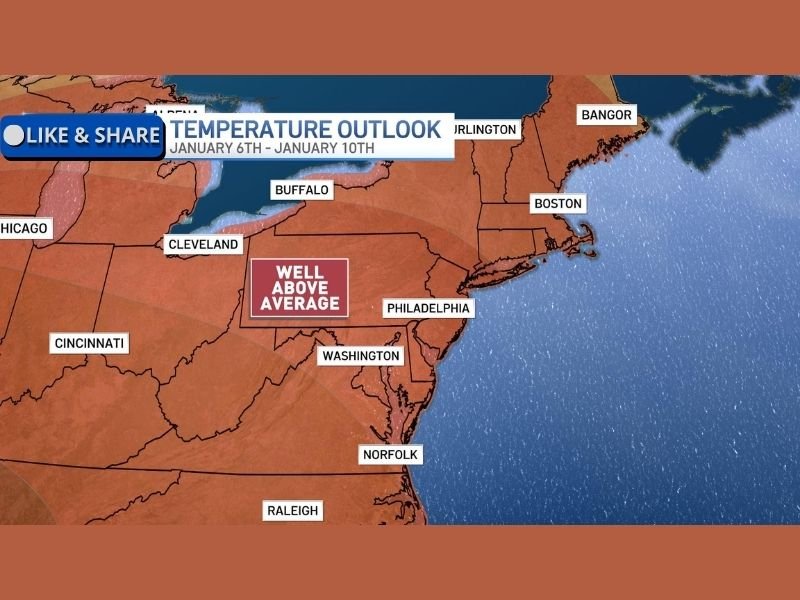
PENNSYLVANIA — A significant warm spell is expected to surge across the Northeast and Mid-Atlantic from January 6th through January 10th, with temperatures forecast to reach the 50s for several consecutive days. Meteorologists say the region will run well above average, marking one of the most pronounced January warmups in recent years.
Large-Scale Pattern Driving the Warmth
A strong ridge of high pressure is projected to settle over the eastern United States next week. This pattern will allow warm air from the south to push northward, elevating temperatures across states including Pennsylvania, New York, New Jersey, Maryland, Delaware, and Virginia.
Forecast maps show nearly the entire region shaded in a broad “well above average” zone, indicating anomalies that could rise 15 to 25 degrees above normal for early January.
Cities likely to feel the strongest impact include:
- Philadelphia
- Washington, D.C.
- Cleveland
- Boston
- Baltimore
- Raleigh
This early-January surge follows a colder start to the month but reflects the persistent variability seen so far this winter season.
Temperatures Forecast To Climb Into The 50s
The temperature outlook highlights several days where afternoon highs may reach the lower to mid-50s, and some urban areas could come close to upper 50s depending on cloud cover. While these values are far from a traditional heatwave, they represent a substantial break from typical January conditions.
The warmest period is expected between January 7th and January 9th, when the ridge peaks and mild air spreads through the Northeast corridor.
What This Means for Residents
The warm spell may provide temporary relief from heating costs and icy travel, but it also brings challenges:
- Snowpack melt in northern areas could increase runoff
- Winter sports destinations may face reduced snow quality
- Cold-sensitive pests may remain active longer than usual
Despite the approaching warmth, long-range forecasts still suggest colder air could return later in January, meaning winter is far from over.
Residents should monitor evolving forecasts as the pattern continues to develop. To stay updated on major weather changes across the United States, follow SaludaStandard-Sentinel.com for ongoing coverage and breaking alerts.