U.S. Tornado Season Starts Quiet in 2026 as Reports Run About Half of Normal and Higher-Risk Days Stay Absent for Months
UNITED STATES — Despite a few recent severe weather episodes, early 2026 has featured an abnormally long quiet stretch for widespread tornado activity, with overall tornado reports running at roughly half the pace of normal so far this year.
Why Meteorologists Say the Pattern Has Been “Overall Quiet”
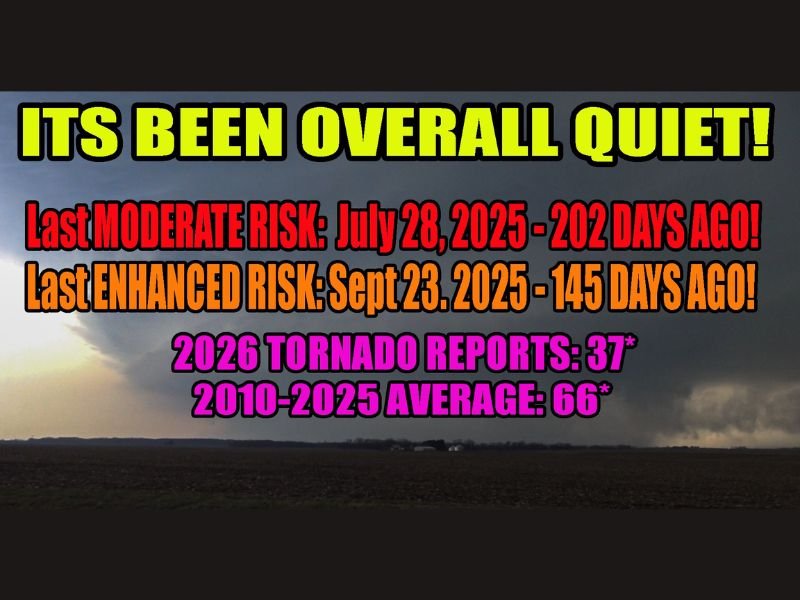
The data shared in the graphic points to a noticeable lull in the frequency of higher-end severe weather setups. One key marker is how long it has been since the country last saw stronger national severe weather outlook categories.
The last Moderate Risk date shown is July 28, 2025, listed as 202 days ago. The last Enhanced Risk date shown is September 23, 2025, listed as 145 days ago. Those gaps suggest a prolonged period without the type of atmospheric patterns that typically produce more widespread, significant tornado outbreaks.
Tornado Reports So Far in 2026 Compared to Recent Averages
Another major signal is the early-year count. The graphic lists 2026 tornado reports: 37, compared to the 2010–2025 average: 66 for the same point in the calendar. That comparison supports the idea that 2026 is trending well below typical levels, even if some individual storms have still produced severe impacts in localized areas.
It’s also important to note the fine print: the dataset is labeled preliminary through Feb. 14, 2026, meaning totals may still be adjusted as reports are confirmed and finalized.
What This Means Heading Into Peak Severe Weather Season
A quiet start does not mean the rest of the season will stay calm. In many years, tornado activity can ramp up quickly once spring patterns lock in and warmer, more humid air begins interacting more frequently with strong upper-level systems.
Forecasters often stress that “quiet” stretches can end abruptly, and the primary severe weather season is approaching. The most practical takeaway for families is to treat this lull as a preparation window—review alerts, know your safe place, and make sure your warning methods work at night.
If you’ve noticed fewer tornado warnings where you live—or if recent storms still hit your area hard—share what you’re seeing and join the conversation at SaludaStandard-Sentinel.com.