Texas Sees Nation’s Worst Mountain Cedar Outbreak as Allergy Levels Spike to Extreme Across Central and North Regions
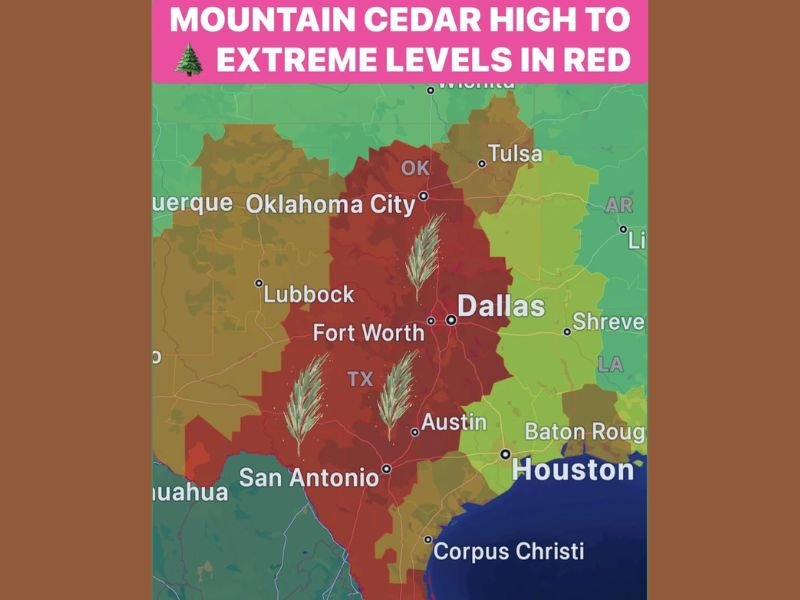
TEXAS — A widespread mountain cedar pollen outbreak has pushed allergy levels into the high to extreme range across large portions of the state, making Texas the worst-affected area in the country right now for cedar fever sufferers. The latest allergy map shows deep red zones covering central and north Texas, signaling conditions that can severely impact people with seasonal allergies, asthma, and respiratory sensitivities.
Central and North Texas Experiencing Extreme Cedar Fever Levels
According to the map, cities including Austin, Dallas–Fort Worth, San Antonio, and surrounding regions are firmly within the highest-risk category, with pollen concentrations elevated enough to trigger symptoms even in people who do not typically suffer from allergies. The red-shaded area stretches northward toward Oklahoma City, indicating that the mountain cedar plume is not confined to one metro area but affecting a broad regional corridor.
Why Mountain Cedar Is So Aggressive Right Now
Mountain cedar, also known as Ashe juniper, releases pollen during the winter months, unlike many other allergens. Under the right conditions—dry air, mild temperatures, and periodic wind—pollen production can spike rapidly and linger for days.
Once airborne, cedar pollen is extremely fine, allowing it to travel long distances and penetrate indoor spaces, making avoidance especially difficult during peak outbreaks like the current one.
Symptoms Can Be Severe Even for Non-Allergy Sufferers
Health experts note that during extreme cedar events, people may experience intense nasal congestion, sinus pressure, headaches, itchy eyes, fatigue, and persistent coughing, even if they do not normally react to pollen. Those with asthma or chronic respiratory conditions are at higher risk for complications, particularly if exposure continues over several consecutive days without relief.
When Relief May Arrive
Forecast notes included with the data suggest that pollen levels are expected to begin easing by Wednesday, as environmental conditions shift and dispersion improves across parts of the region. However, until levels fall out of the red category, residents are advised to limit outdoor exposure, keep windows closed, use air filtration indoors, and follow allergy treatment plans if symptoms worsen.
What Texans Should Do Now
Doctors recommend daily allergy medications, saline rinses, and minimizing time outdoors during windy periods while cedar levels remain elevated. Changing clothes after outdoor exposure can also reduce pollen brought indoors.
With Texas currently facing the most severe mountain cedar outbreak in the country, residents are encouraged to stay alert, monitor symptom changes, and follow local health guidance as conditions evolve. How are cedar fever conditions affecting you this week? Share your experience and stay updated with ongoing health and environmental coverage at SaludaStandard-Sentinel.com.