Texas, Oklahoma, Arkansas, Louisiana and Mississippi Could Face Potential Late-January Snow Event, Early Model Signals Suggest
TEXAS — Early long-range model data is showing new signs that a winter storm pattern may try to develop between January 22–25, raising the possibility of snowfall across parts of Texas, Oklahoma, Arkansas, Louisiana, and Mississippi. While confidence is still low, multiple ensemble systems are beginning to hint at the same general idea: late-January cold air interacting with southern moisture.
Why This System Is Being Watched
The discussions circulating around current model output point to three major ensemble groups trending toward a similar solution, even though they disagree on the exact timing, placement, and intensity.
Meteorologists tracking these signals emphasize that a shared pattern idea this far out is noteworthy, though not a forecast.
Data commentary highlights that this same situation happened earlier in January when snow was dismissed, only for many southern locations to wake up to around 7 inches on the ground. The memory of that event is fueling renewed attention on this setup.
What Models Are Showing Right Now
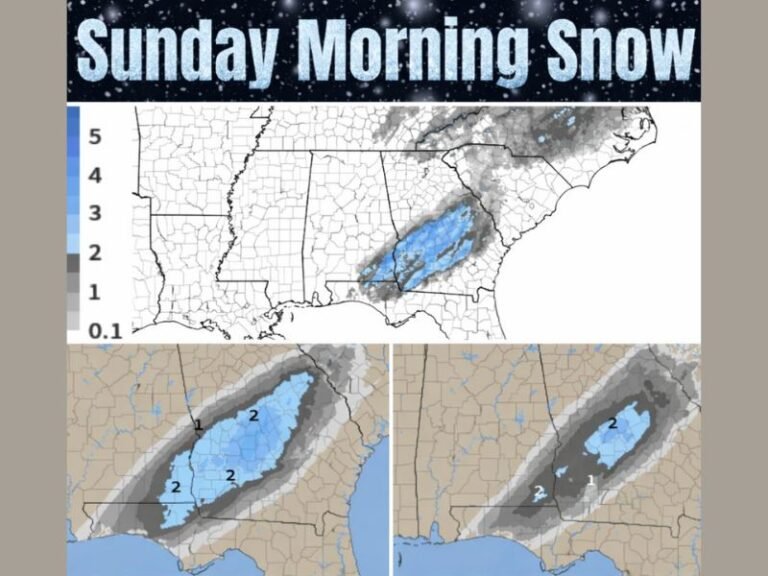
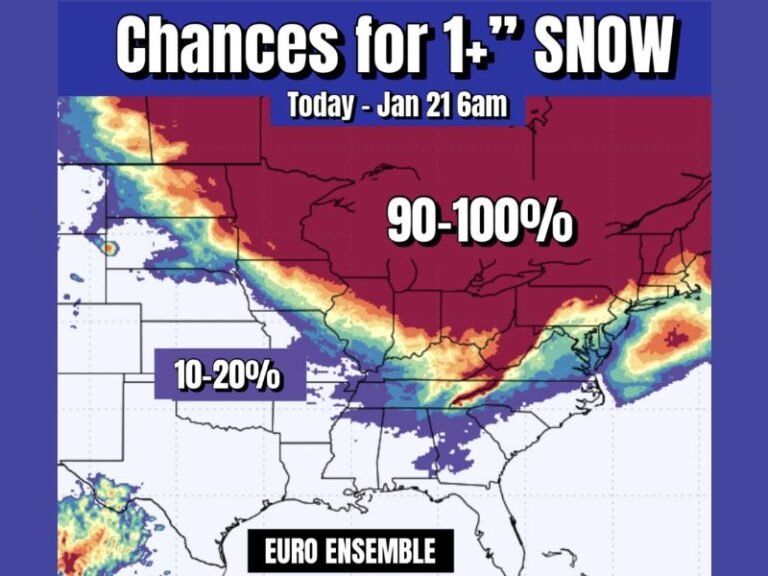
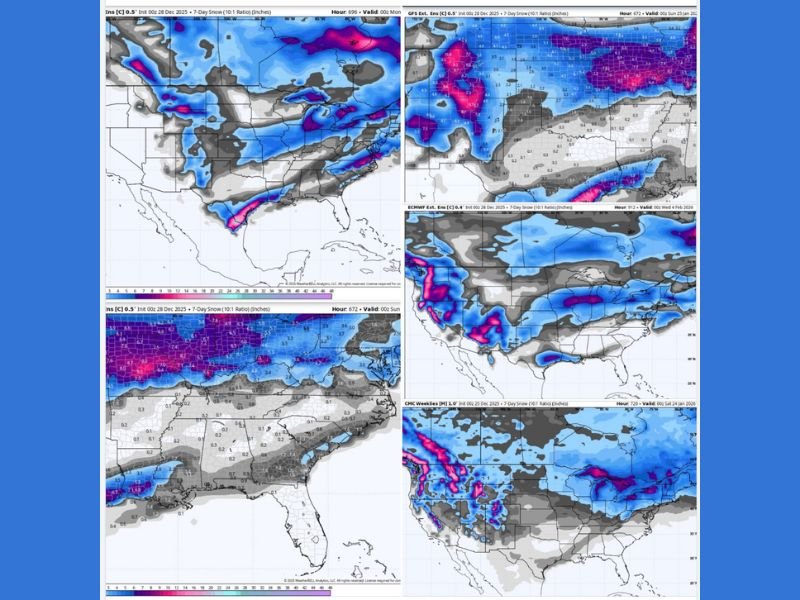
Several models and ensemble members displayed in the provided charts show:
- Potential 7-day snow totals extending from West Texas into Oklahoma and through Arkansas and Mississippi in some simulations
- Other models showing lighter or limited snow, keeping most accumulation north
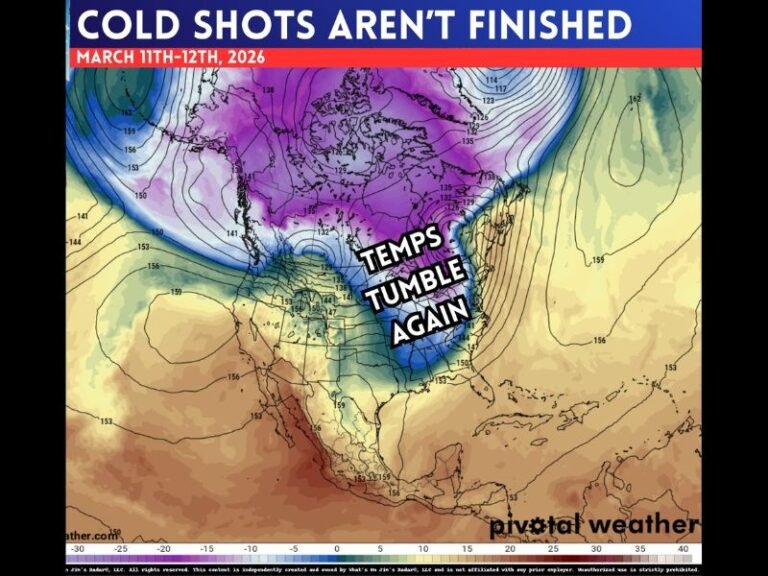
- A consistent signal of cold air spreading deep into the South
- A storm track cutting across the south-central United States, with cold air on the backside capable of producing winter precipitation
While the maps vary widely, the overlapping idea of southern impacts is what forecasters are watching.
Why Confidence Remains Low
Even though the pattern appears active:
- Timing differs between models
- Placement of the storm system varies greatly
- Snow output fluctuates every run
- Ensembles indicate agreement on the pattern, not on specific details
Experts describe this timeframe as “not locked, but not ignorable.”
The message: It’s too early for certainty, but too consistent to dismiss.
Why Southern States Should Pay Attention
Comments from the provided data stress that January already surprised the South earlier this year, reminding residents that:
- Model confidence drops quickly at long range
- Ensemble signals can precede real impacts
- Winter systems can shift suddenly in the final days
As one of the observers stated, “History loves embarrassing people who talk spicy too early.”
What Happens Next
Forecast details will become clearer once the storm system enters the short-range model window. Until then, residents across Texas, Oklahoma, Arkansas, Louisiana, and Mississippi should stay aware and monitor updates, especially given the potential for cold-air-driven winter weather in late January. Stay connected with SaludaStandard-Sentinel.com for developing updates as new data arrives.