Oklahoma Wildfire Crisis: “43 Fire” Pushes Into Woodward Neighborhoods, Forcing Families to Evacuate as Flames Close In
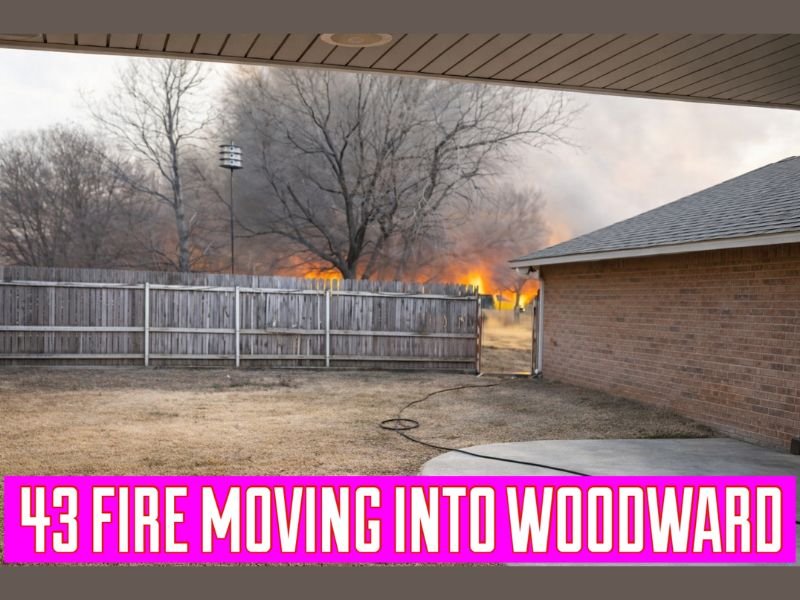
WOODWARD, OKLAHOMA — Residents on the south side of Woodward were seen taking one last look out their back doors before evacuating, as the fast-moving “43 Fire” approached neighborhoods and sent thick smoke across the community.
What The Images And Caption Show In Woodward
The scene shared from Woodward captures an intense, close-to-home view: flames glowing behind a fence line, smoke hanging low in the background, and fire clearly burning near residential property. The caption describes the moment as “heartbreaking,” with locals evacuating to safety as the fire moves into town and closes distance on neighborhoods.
Why This Situation Is So Dangerous For Neighborhoods
Wildfires that push into or near town limits can change rapidly, especially when dry grass, brush, and wind allow flames to run quickly across open areas. When a fire reaches fences, yards, or tree lines near homes, the risk can escalate in minutes due to embers, shifting wind direction, and limited visibility from heavy smoke.
Even if flames are not directly touching structures, smoke and ember fallout can create dangerous conditions for families trying to leave, and for crews attempting to protect homes and establish containment lines.
What Residents Should Do If A Fire Is Approaching
If you are in or near an evacuation zone during a fast-moving wildfire, safety officials typically urge residents to act early rather than waiting for the last moment. Key steps include:
- Leave immediately if evacuation orders are issued, or if fire is visible near homes
- Keep go-bags ready with medications, IDs, chargers, and essential documents
- Avoid driving through heavy smoke where visibility drops suddenly
- Check on neighbors who may need help leaving quickly
- Do not return until authorities confirm it is safe
What Happens Next As The Fire Advances
As the 43 Fire moves into populated areas, the immediate focus typically shifts to life safety—getting people out—while crews work to slow spread and protect structures. Residents should continue monitoring local emergency alerts and updates for evacuation routes, shelter locations, and changing fire conditions.
What are you seeing in your area—smoke, evacuations, or road closures? Share your local updates and follow along with SaludaStandard-Sentinel.com as we continue tracking major incidents across the U.S.