Ohio–New York Lake Erie Seiche Causes 13.5-Foot Water Level Difference After Powerful Winds
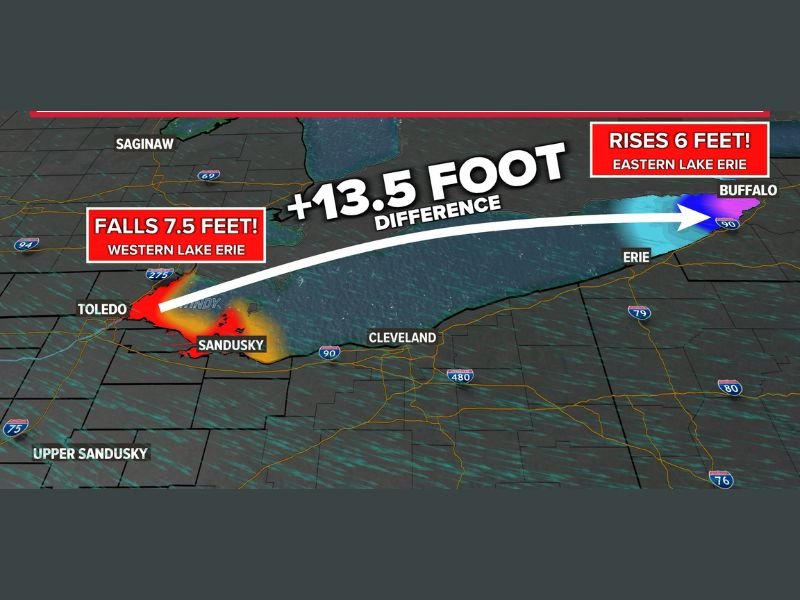
OHIO — A powerful wind-driven Lake Erie seiche on Monday created an extraordinary and sudden shift in water levels across the lake, producing a 13.5-foot difference between western and eastern shores. Officials confirmed that water levels in Toledo plunged 7.5 feet, while levels near Buffalo surged just over 6 feet almost simultaneously.
How the Seiche Unfolded Across Lake Erie
According to weather analysts, strong winds pushed water rapidly from west to east, draining the western basin around Toledo and Sandusky and piling water up toward Buffalo on the eastern end of the lake. The result was an extreme and fast-moving displacement that exposed parts of the western shoreline while raising levels dangerously high in New York.
Graphics released by meteorologists illustrate the dramatic swing, showing the western basin dropping into very low water conditions while eastern Lake Erie entered the high-water hazard zone.
Western Basin Drops by 7.5 Feet
Communities near Toledo and Sandusky saw the most significant decline. The sudden fall exposed lakebed areas and caused rapid changes in nearshore conditions, a hallmark impact of a strong seiche event. Weather officials reported that winds during the event were powerful enough to push large volumes of water eastward in a short period.
Buffalo Experiences a Rise of Over 6 Feet
As the water shifted, Buffalo and surrounding portions of eastern Lake Erie saw a rise of just above 6 feet, raising concerns about shoreline flooding and increased pressure on local infrastructure. Emergency managers monitored the situation as water levels surged to their peak late Monday.
This type of oscillation is not uncommon on the Great Lakes, but the 13.5-foot difference observed Monday is considered especially significant and highlights the impact of persistent, high-intensity wind patterns on inland lakes.
Residents along both shores are encouraged to remain aware of fluctuating water levels, particularly during periods of strong storms or sustained winds. Stay updated on major regional weather developments at SaludaStandard-Sentinel.com.