North Carolina, South Carolina and Georgia See Ruby-Throated Hummingbird Spring Migration Reach Charlotte and Raleigh Areas
NORTH CAROLINA — Crowdsourced tracking reports confirm that ruby-throated hummingbirds have now reached the Charlotte and Raleigh areas as part of their spring migration, marking a seasonal shift across parts of North Carolina, South Carolina, and Georgia.
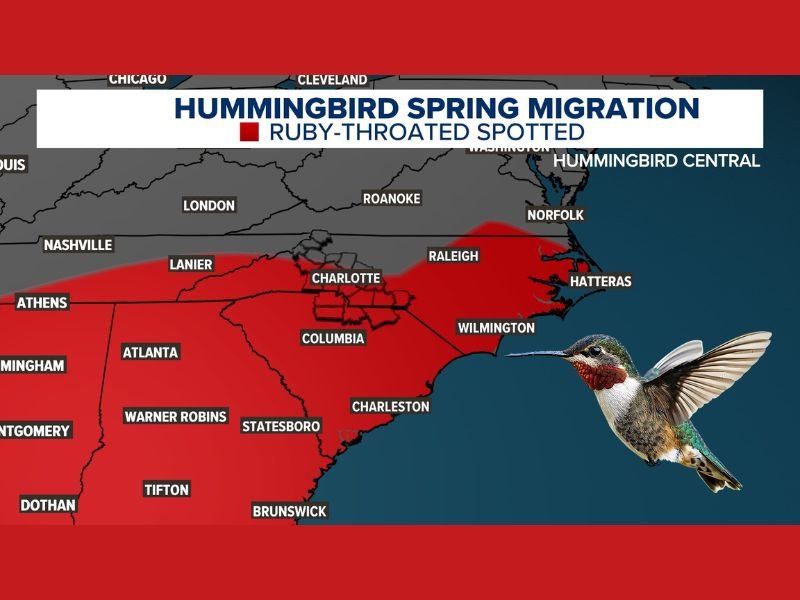
The latest migration map shows a broad wave of activity spreading across the Carolinas and into Georgia, signaling that the birds are actively moving north after wintering farther south.
Migration Wave Expands Across North Carolina and South Carolina
The current migration pattern highlights widespread movement across North Carolina and South Carolina, with key cities like Charlotte, Raleigh, Columbia, and Charleston falling within the active zone.
Observers in these areas are reporting increased sightings, suggesting that the migration is not only underway but intensifying. The presence of hummingbirds in both inland and coastal regions indicates favorable conditions for their continued movement.
This northward push is a typical sign of early spring, as warming temperatures and blooming plants provide the nectar sources these birds rely on.
Georgia Also Sees Strong Migration Activity
The migration wave extends into Georgia, with cities such as Atlanta, Athens, and Warner Robins included within the active region. This confirms that the hummingbirds have already passed through southern areas and are continuing their journey northward.
Georgia often serves as a key transition zone during migration, and the current data suggests a healthy and active movement season so far. Residents across the state may notice increased feeder activity as birds stop to rest and refuel before continuing north.
Why Ruby-Throated Hummingbirds Are Appearing Now
Ruby-throated hummingbirds typically begin their migration from Central America and southern regions in late winter, gradually moving north as temperatures rise.
Their arrival in the Carolinas and Georgia aligns with seasonal changes, including longer daylight hours and the availability of flowering plants. These conditions are essential for sustaining the birds during their long journey.
Experts note that migration timing can vary slightly each year depending on weather patterns, but the current spread suggests a fairly typical progression for late March.
What Residents Can Expect in the Coming Days
With hummingbirds now reaching Charlotte and Raleigh, more sightings are expected to increase across surrounding areas in the coming days. As the migration continues, northern regions beyond the Carolinas will likely begin to see activity soon.
Residents interested in attracting hummingbirds are encouraged to maintain feeders and plant nectar-rich flowers, which can help support the birds during their journey.
The ongoing migration also provides a unique opportunity for birdwatchers and nature enthusiasts to observe one of spring’s most recognizable seasonal events.
Have you spotted hummingbirds in your area yet? Share your sightings and experiences with others by visiting SaludaStandard-Sentinel.com and joining the local conversation.