North Carolina and South Carolina Face Heavy Pollen Surge as Charlotte, Raleigh, Columbia and Greenville See Widespread Accumulation This Week
CHARLOTTE, NORTH CAROLINA — A widespread surge in pollen levels is blanketing much of North Carolina and South Carolina over the next few days, bringing difficult conditions for allergy sufferers across the region.
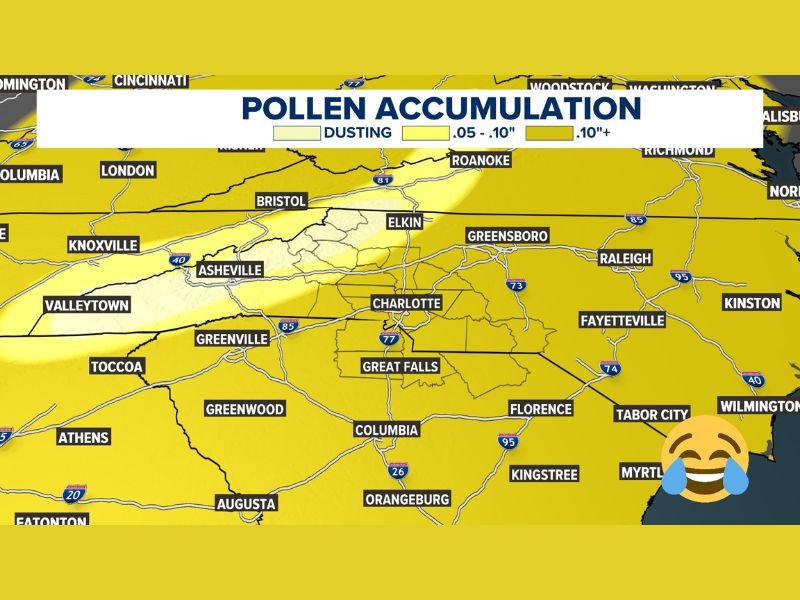
Forecast maps show significant pollen accumulation stretching from the western mountains through major metro areas and into the coastal plains, with some areas seeing especially high concentrations.
Widespread Pollen Covering Both Carolinas
The latest outlook indicates that nearly the entire region — including cities like Charlotte, Raleigh, Greensboro, Columbia, Greenville, and Florence — is experiencing moderate to heavy pollen buildup.
From the foothills near Asheville and Elkin to eastern cities like Fayetteville and Wilmington, pollen is settling across a broad geographic area, creating a persistent layer of allergens in the air.
Even typically less-affected zones are now seeing noticeable accumulation, signaling just how widespread this event has become.
Highest Concentrations Near Urban Corridors
The heaviest pollen levels appear concentrated around major population centers, particularly along the Interstate corridors running through Charlotte, Raleigh, and Columbia.
These areas are seeing deeper shades on the accumulation map, indicating higher pollen counts that can trigger stronger allergy symptoms.
Residents in these zones may notice increased irritation, including sneezing, itchy eyes, and reduced air quality, especially during the afternoon when pollen tends to peak.
Weather Conditions Fueling the Surge
Dry conditions, warming temperatures, and light winds are all contributing to the spike in pollen levels.
With limited rainfall expected in the immediate forecast, there is little to wash allergens out of the air, allowing pollen to accumulate day after day.
This pattern is typical during early spring but appears more intense than usual due to the combination of warmth and dryness across both states.
Allergy Season Ramps Up Quickly
This surge marks a clear sign that peak allergy season is arriving across the Carolinas.
Tree pollen, which is common this time of year, is likely the primary driver behind the elevated levels, especially as vegetation rapidly responds to warming temperatures.
For many residents, this means the return of seasonal allergy symptoms earlier and more aggressively than expected.
Tips for Residents Dealing With High Pollen
Health experts recommend limiting outdoor exposure during peak pollen times, keeping windows closed, and using air filtration systems indoors.
Changing clothes after spending time outside and rinsing off pollen from skin and hair can also help reduce symptoms. Those with severe allergies may want to monitor daily pollen counts and consider preventative medications.
If you’re already feeling the effects of this pollen surge, share your experience and stay updated with local conditions on SaludaStandard-Sentinel.com.