Nebraska Sinkhole Swallows Two Vehicles Near University of Nebraska-Omaha, Security Video Shows Drivers Escaping
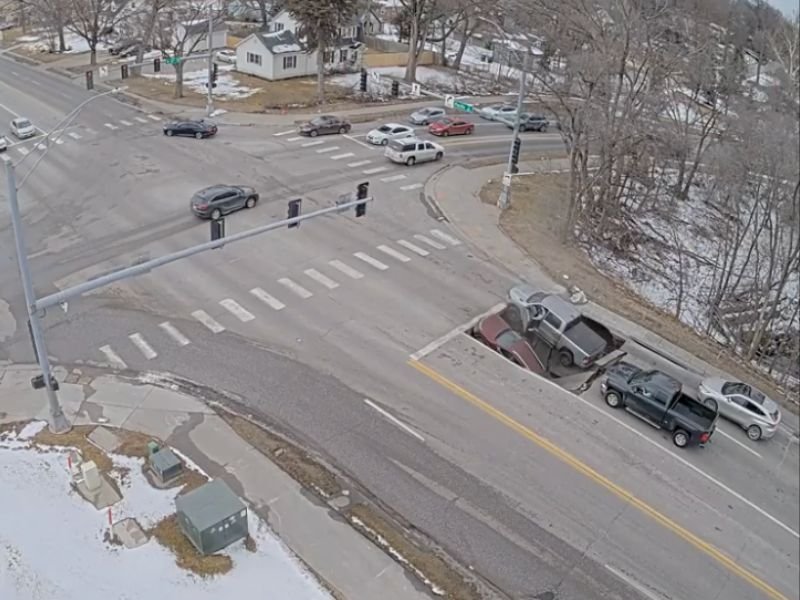
OMAHA, NEBRASKA — A sudden sinkhole opened on a city street near the University of Nebraska-Omaha on Tuesday, pulling two vehicles into the collapse in a frightening moment captured on UNO Public Safety security cameras. Officials say the drivers were able to get out of their vehicles, avoiding what could have been a far more serious outcome.
The video shows the moment the roadway gives way beneath moving traffic, turning what looks like an ordinary intersection into an instant hazard zone.
What the Security Video Captured
Security footage from University of Nebraska-Omaha Public Safety reportedly shows two separate vehicles dropping into the same sinkhole area. In both cases, the drivers are seen escaping after the collapse—an important detail that calmed immediate fears of entrapment or serious injuries.
While the clip circulating online focuses on the dramatic roadway failure, the larger concern for drivers is what came next: a damaged intersection, unpredictable ground conditions, and the risk of additional collapse until crews can fully stabilize the area.
Why Sinkholes Can Form Without Much Warning
Sinkholes can happen when water washes away soil and supporting material beneath pavement, leaving a hidden void that eventually collapses under weight. In winter and early spring, repeated freeze-thaw cycles, heavy runoff, and underground utility issues can all contribute to sudden failures in roads and sidewalks.
Even when a street surface looks normal, the ground beneath it can be weakened—especially near older infrastructure, drainage lines, or areas where water pools and repeatedly infiltrates the same sections of soil.
What Drivers Should Do If the Roadway Starts to Fail
If you ever see pavement dipping, cracking, or sagging, safety experts recommend treating it like an active hazard.
Key safety reminders include:
- Do not drive around cones or barricades, even if the detour looks inconvenient.
- Back away immediately if you notice a fresh depression or spreading cracks.
- Call local authorities to report the location so crews can block the area quickly.
- If a collapse happens nearby, stay clear of the edge, because the ground can continue to give way.
What Happens Next
After incidents like this, city crews typically shut down the affected lanes, assess underground conditions, and begin repairs that may involve excavating the roadway, inspecting nearby utilities, and rebuilding the base before repaving.
If you’ve ever experienced a sudden road collapse or a near-miss in your area, what would you want local officials to prioritize first—faster repairs, stronger inspections, or better warning systems? Share your thoughts with SaludaStandard-Sentinel.com.