Geomagnetic Storm Begins After First High-Speed Solar Eruption Strikes Earth, With Second CME Still Approaching
UNITED STATES — A geomagnetic storm is currently underway after the first of two high-speed coronal mass ejections (CMEs) from the Sun reached Earth, disturbing the planet’s magnetic field and triggering atmospheric reactions visible from space. The event unfolded rapidly, with solar material impacting Earth only minutes before reports emerged, prompting scientists to closely monitor conditions as a second CME continues to race toward the planet, potentially prolonging the storm.
First Solar Impact Triggers Immediate Geomagnetic Activity
The initial CME struck Earth at high speed, compressing the planet’s magnetosphere — the protective magnetic shield that deflects most solar radiation. This sudden compression sparked a geomagnetic storm, a natural space-weather event that occurs when solar particles interact strongly with Earth’s magnetic field.
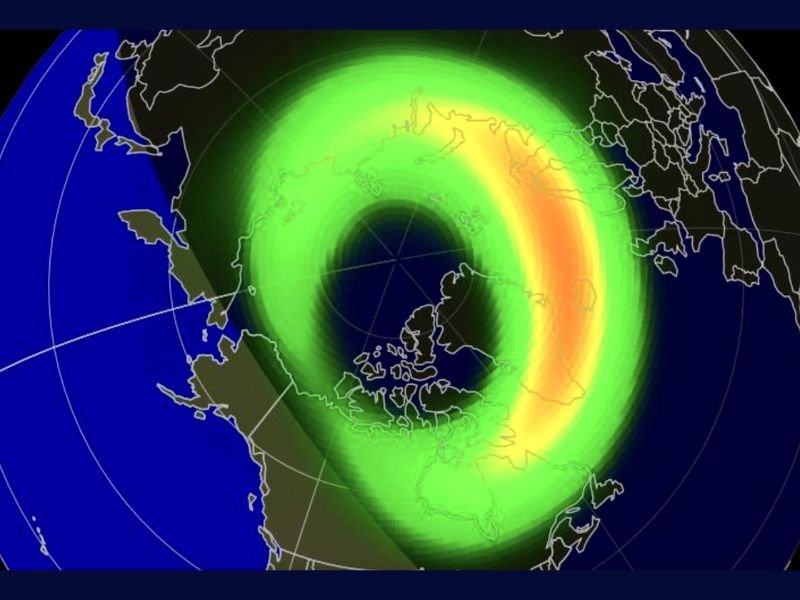
As a result, the upper atmosphere began responding almost immediately, producing enhanced auroral activity. These glowing displays occur when charged particles funnel along magnetic field lines and collide with atmospheric gases, releasing energy in the form of light.
Aurora Activity Expands Into Mid-Latitude Regions
With geomagnetic conditions elevated, auroras may become visible farther from the polar regions than usual, especially across mid-latitude locations. Visibility depends heavily on cloud cover, local light pollution, and how strongly Earth’s magnetic field remains disturbed.
While not everyone will see the northern lights, space-weather experts note that even brief clear periods could offer viewing opportunities, particularly in darker, rural areas. The intensity and reach of the auroras will fluctuate as solar energy continues interacting with Earth’s atmosphere.
Second Incoming CME Could Extend the Storm
Forecasters warn that the current geomagnetic activity may last several hours or longer, as a second CME is still inbound and could reinforce the ongoing disturbance. If the incoming solar material aligns favorably with Earth’s magnetic field, it may strengthen or prolong the storm.
This second impact does not guarantee stronger effects, but it does increase uncertainty in short-term space-weather forecasts. Scientists are tracking its speed, density, and magnetic orientation to determine how it may influence conditions once it arrives.
What This Means for Everyday Life
At this time, the geomagnetic storm is considered a natural atmospheric event, not a direct threat to public safety. Storms of this magnitude occur periodically during active solar cycles and are routinely monitored by space-weather agencies.
While strong geomagnetic storms can sometimes affect satellites or radio communications, there have been no confirmed reports of widespread disruptions linked to this event so far. Most impacts, if any, are expected to remain limited and temporary.
Staying Informed as Solar Activity Continues
Solar activity often comes in clusters, and this event highlights how quickly space-weather conditions can change. Observers interested in aurora viewing should continue checking local forecasts and sky conditions, especially overnight. Have you noticed unusual aurora activity or changes in the night sky? Share your observations and stay updated with science and weather coverage at SaludaStandard-Sentinel.com.