February Brings Noticeable Daylight Gains Across the U.S., Adding 45 to 90 Extra Minutes by Month’s End
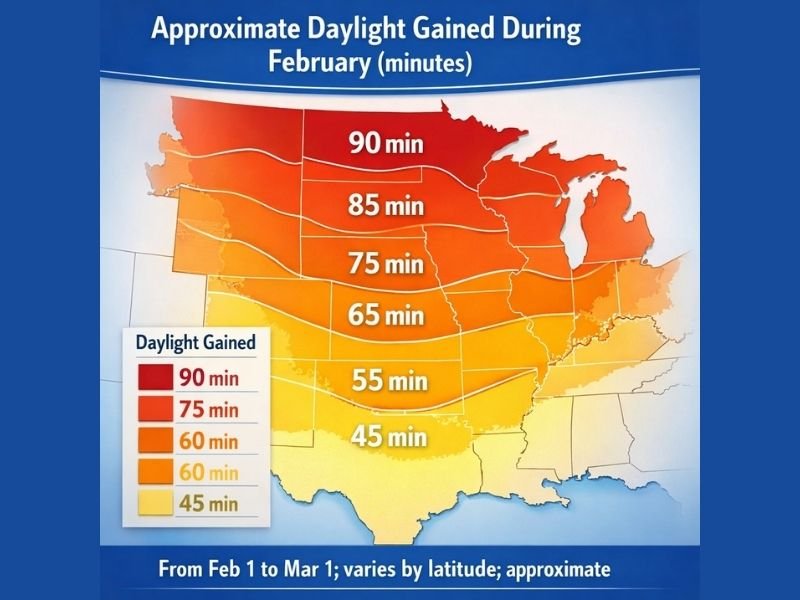
UNITED STATES — February marks the point in winter when daylight begins making a noticeable comeback, and new data shows much of the country will gain between 45 and 90 minutes of daylight by March 1, depending on latitude. While cold weather still dominates in many regions, the steady return of sunlight is already changing how evenings feel across the nation.
How Much Daylight February Adds by Region
According to the daylight map, latitude plays the biggest role in how much daylight is gained during February, with northern states seeing the largest increase:
- Northern U.S. (Upper Midwest, Northern Plains, Northern Rockies): Up to 90 minutes gained
- Central U.S. (Midwest, Central Plains, Interior Northeast): 75 to 85 minutes gained
- Southern U.S.: 45 to 65 minutes gained, depending on location
Even in the southernmost states, the gain is enough to noticeably extend daylight into the early evening.
Why February’s Daylight Increase Feels So Noticeable
While daylight technically begins increasing right after the winter solstice in December, February is when the gains accelerate enough for people to feel it day to day. By late February, sunsets are occurring significantly later than they did just a month earlier.
For many communities, this means less “after-work darkness”, improved visibility for evening errands, and a psychological boost after months of early sunsets.
What the Extra Daylight Means for Daily Life
The additional daylight doesn’t change temperatures overnight, but it does change routines:
- Evening walks feel safer and less rushed
- Commutes end with more light instead of darkness
- Outdoor chores and errands become easier
- Seasonal mood improvements often begin during this period
Meteorologists note that longer daylight also increases solar energy, which slowly begins influencing temperatures as spring approaches.
Winter Isn’t Over — But the Sun Is Shifting
Despite the growing daylight, February remains a winter month, and cold air outbreaks are still possible. However, the steady gain in sunlight is a sign that the seasonal balance is shifting.
By the end of February, many areas will have nearly an extra hour or more of usable daylight, a milestone that often makes late winter feel more manageable.
What Comes Next
Daylight will continue increasing through March, with even faster gains leading up to the spring equinox, when day and night become nearly equal in length.
Until then, February’s daylight boost serves as an early reminder that longer days are ahead, even as winter weather lingers. Stay with SaludaStandard-Sentinel.com for continued coverage of seasonal changes, weather trends, and what to expect as winter slowly gives way to spring.