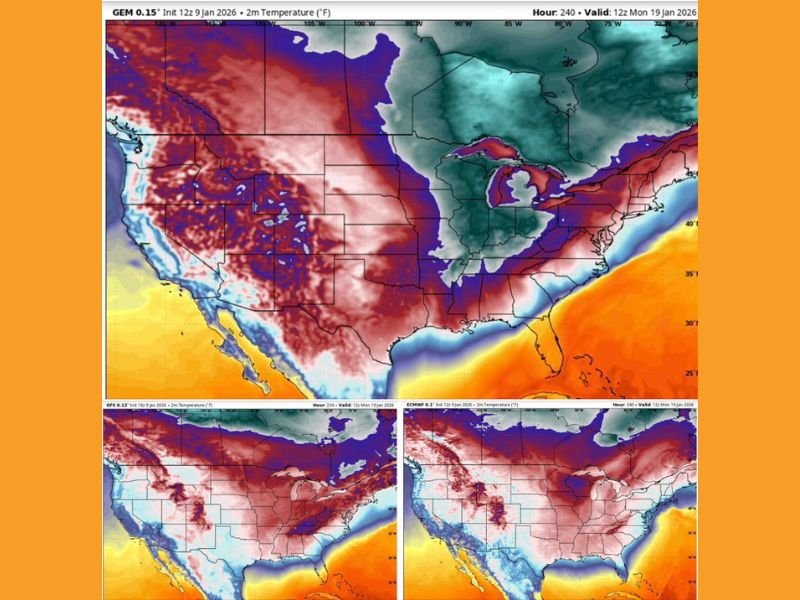
Deep South Faces Potential Arctic Blast January 18–19 as Multiple Forecast Models Signal Dangerous Cold Invasion
UNITED STATES — Weather models are increasingly aligning around a significant Arctic air intrusion expected January 18–19, with forecasters warning that bitter cold could plunge deep into the southern United States, potentially reaching areas unaccustomed to prolonged freezing temperatures.
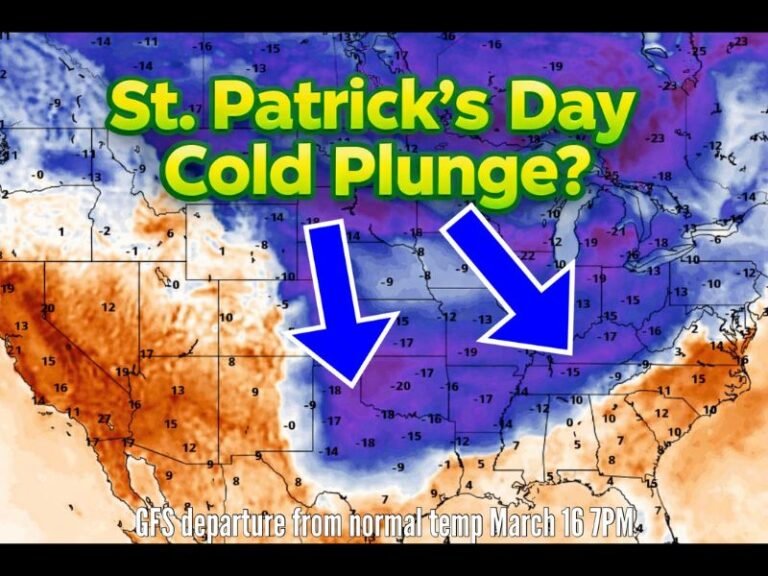
Multiple long-range models, including European, GFS, and Canadian guidance, are now showing a similar pattern: Arctic air surging southward with little resistance, driven by a highly energetic and shifting winter setup.
Forecast Models Show Rare Alignment on Arctic Air Push
Meteorologists monitoring long-range data say it is unusual to see several independent forecast models converge on the same outcome this far out. Current projections indicate that cold air from Canada could spill rapidly into the central and eastern U.S., with the Deep South squarely in the potential impact zone.
Forecasters emphasize that this setup does not rely on snowpack or ideal surface conditions. Arctic air masses are capable of advancing aggressively on their own, especially when upper-level winds and pressure patterns align.
Why the January Pattern Raises Concern
Weather experts note that the mid-January pattern appears highly energetic, meaning fast-moving systems, sharp temperature drops, and limited predictability beyond a few days. This kind of setup has historically produced sudden cold snaps that arrive faster and colder than expected.
While exact temperature values are still uncertain, current model output suggests widespread subfreezing air, with some regions potentially seeing temperatures well below seasonal averages.
Cold Risks Extend Beyond Snowfall
Forecasters stress that this potential event is about cold, not snow. Even areas that remain dry could experience serious impacts, including:
- Frozen and burst pipes
- Increased strain on power grids
- Hazardous travel due to overnight ice
- Risks to pets, plants, and vulnerable populations
Previous Arctic outbreaks in the South have caused significant infrastructure damage even without heavy winter precipitation.
Experts Warn Against Overconfidence or Dismissal
Meteorologists caution residents not to dismiss the threat simply because models sometimes exaggerate long-range cold events. They note that while details will change, the overall signal for a meaningful Arctic intrusion is becoming harder to ignore.
Officials advise residents across southern states to begin thinking about cold-weather preparations, especially if newer forecasts continue to reinforce this trend in the coming days.
What Happens Next
Forecast confidence will increase as January 18 approaches and higher-resolution data becomes available. Meteorologists say they will be watching closely for shifts in the jet stream and upper-level energy that could determine how far south and how intense the cold becomes.
For now, forecasters agree on one thing: Arctic air is showing strong signals of moving south, and residents across the Deep South should stay alert for updated guidance. What steps do you take to prepare when extreme cold threatens your area? Share your experience and stay updated with continued coverage at SaludaStandard-Sentinel.com.