Alabama Rainfall Deficit Expands Statewide as North and East Regions Fall Several Inches Below Normal While Drought Risk Builds Into Summer
ALABAMA — Despite periods of recent rainfall, much of Alabama is now officially falling below normal precipitation levels for 2026, raising growing concerns about drought conditions heading into the warmer months.
While some cities like Tuscaloosa and Birmingham have managed to stay closer to seasonal averages, large portions of North and East Alabama are experiencing significant rainfall deficits, signaling a widening gap that could impact agriculture, water supply, and wildfire risk.
Rainfall Totals Reveal Uneven Distribution Across State
The latest year-to-date rainfall data as of late March paints a mixed picture across Alabama. Tuscaloosa stands out as one of the few areas slightly above normal, recording just over 15 inches of rainfall and maintaining a small surplus.
Birmingham, meanwhile, is hovering just below average, with a modest deficit that suggests relatively stable conditions for now. However, conditions worsen as you move north and east across the state.
Cities like Huntsville and Muscle Shoals are reporting some of the most significant shortfalls, with deficits exceeding three inches below normal. Other areas, including Anniston, Shelby County, and Montgomery, are also showing notable rainfall shortages, indicating that the dry trend is becoming more widespread.
North and East Alabama Feeling the Greatest Impact
The most concerning trend lies in North and East Alabama, where rainfall deficits are becoming increasingly pronounced. These regions are experiencing persistent dryness despite occasional rain events, suggesting that recent precipitation has not been sufficient to reverse longer-term deficits.
Meteorologists warn that this pattern could lead to worsening soil moisture conditions, impacting farming operations and increasing stress on local ecosystems. The continued dryness could also heighten the risk of brush fires, especially as temperatures begin to rise heading into spring and summer.
NOAA Outlook Points to Continued Dry Conditions
Forecast models from NOAA suggest that drought conditions may persist across Alabama through at least June. This outlook reinforces concerns that current deficits could deepen if consistent rainfall does not return soon.
Even areas currently near average, such as Birmingham, could begin to slip further below normal if dry conditions continue. The long-term forecast indicates that Alabama may remain under a pattern unfavorable for sustained, widespread rainfall.
European Model Signals Possible Rainfall Relief
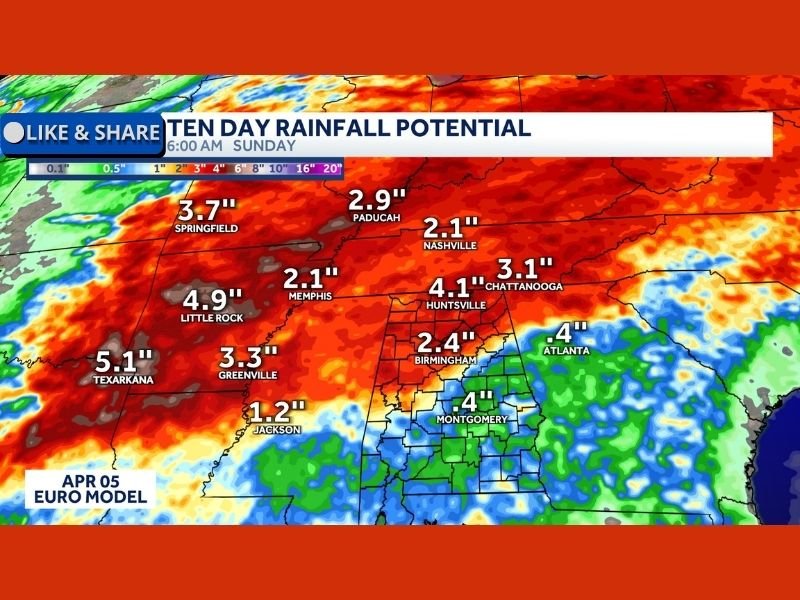
There is, however, a potential shift on the horizon. Forecast guidance from the European weather model is beginning to show signs of increased rainfall potential across North and Central Alabama around the Easter weekend timeframe.
This projected system could bring several inches of rain to parts of the state, offering a possible break in the dry pattern. While meteorologists caution that long-range models are not always precise, this marks the first meaningful indication of a potential pattern change in over a week.
Ten-Day Rainfall Outlook Highlights Key Zones
Extended rainfall projections suggest that areas across northern Alabama could see moderate to significant precipitation totals in the coming days. Cities such as Huntsville and surrounding regions may receive multiple inches of rainfall if the system develops as expected.
Central Alabama, including Birmingham and Montgomery, could also benefit from increased rainfall, though totals may vary depending on storm track and intensity. Southern portions of the state appear more likely to receive lighter amounts, leaving some areas still vulnerable to ongoing dryness.
Growing Concern as Spring Progresses
The combination of existing rainfall deficits and uncertain forecast conditions has heightened concern among meteorologists and local officials. Without consistent and widespread rainfall, Alabama could face an expanding drought situation as the spring season progresses.
Experts emphasize that even a few rounds of rain may not be enough to fully erase current deficits, especially in the hardest-hit regions. Sustained rainfall over several weeks would likely be needed to bring conditions back to normal levels.
As Alabama continues to monitor changing weather patterns, residents are encouraged to stay informed and be mindful of water usage as conditions evolve.
Have you noticed drier conditions or changes in rainfall where you live in Alabama? Share your observations and stay updated with ongoing coverage at SaludaStandard-Sentinel.com.