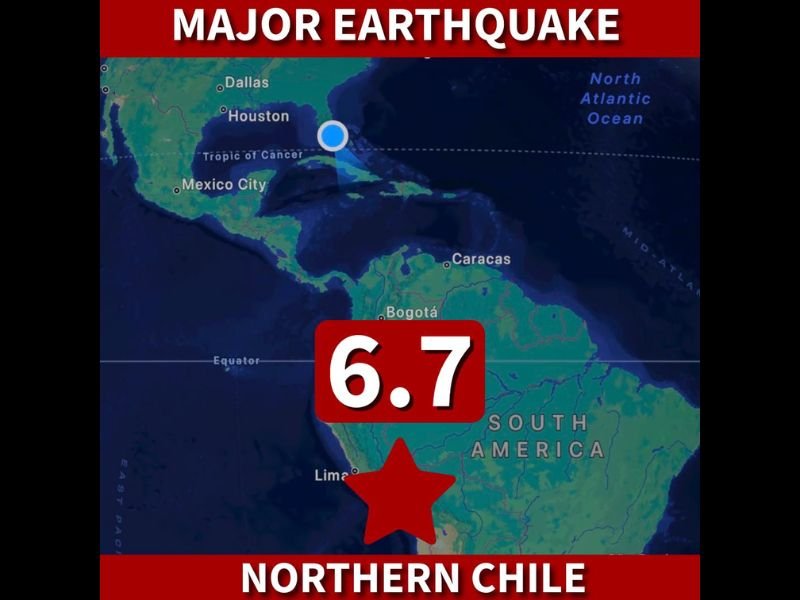
Major Magnitude 6.7 Earthquake Strikes Northern Chile in a Significant Seismic Event Along One of the World’s Most Seismically Active Regions on the South American Pacific Coast
SANTIAGO, CHILE — A major magnitude 6.7 earthquake has struck northern Chile in a significant and powerful seismic event along the South American Pacific coast. The earthquake, classified as major on the seismic intensity scale, occurred in one of the most seismically active regions on Earth where the Nazca Plate subducts beneath the South American Plate along the Peru-Chile Trench, a tectonic boundary responsible for some of the largest and most destructive earthquakes ever recorded in human history.
Major 6.7 Magnitude Earthquake Strikes Northern Chile Along Highly Active Tectonic Boundary
A magnitude 6.7 earthquake is classified as a major seismic event, representing a level of ground shaking capable of causing significant damage to structures, triggering landslides, and generating strong shaking felt across a broad geographic area surrounding the epicenter. Northern Chile sits along one of the most seismically prolific zones on the planet, where the ongoing subduction of the Nazca Plate beneath South America generates frequent and powerful earthquakes across the region throughout any given year.
The epicenter location in northern Chile places the earthquake within a zone that has historically produced some of the most powerful seismic events ever recorded, including the 1960 Valdivia earthquake which remains the largest earthquake in recorded history at magnitude 9.5.
Seismic Activity Along the Peru-Chile Trench Represents an Ongoing and Well Documented Hazard
The Peru-Chile Trench subduction zone along the western coast of South America is one of the most geologically active and seismically hazardous regions on Earth. The constant convergence of the Nazca and South American tectonic plates generates enormous amounts of accumulated stress that releases periodically in the form of powerful earthquakes across the region, making northern Chile one of the most earthquake prone areas on the planet and a subject of continuous monitoring by seismological institutions worldwide.
Damage Assessment and Aftershock Monitoring Underway Following the Major Strike
Following a major magnitude 6.7 earthquake, authorities and seismological agencies conduct immediate damage assessments and implement aftershock monitoring protocols across the affected region. Aftershocks following a 6.7 magnitude event can themselves reach significant magnitudes and are expected to continue across the northern Chile region in the hours and days following the initial strike.
For continuing coverage of major seismic events and natural disasters across the world, visit SaludaStandard-Sentinel.com.