Frost Still Possible Through Early May Across Philadelphia, New Jersey and Delaware Valley Despite Next Week’s Warm Up, Forecasters Warn Gardeners Not to Plant Yet
PHILADELPHIA, Pa. — Gardeners across the Philadelphia region, southern New Jersey, and Delaware are being urged to hold off on planting despite an upcoming stretch of warmer weather. Meteorologists with NBC10 First Alert Weather have issued a regional advisory warning that frost remains a real possibility through early May, meaning that tender plants placed in the ground now could be at serious risk of damage or death.
Frost Risk Extends From the Poconos to Cape May
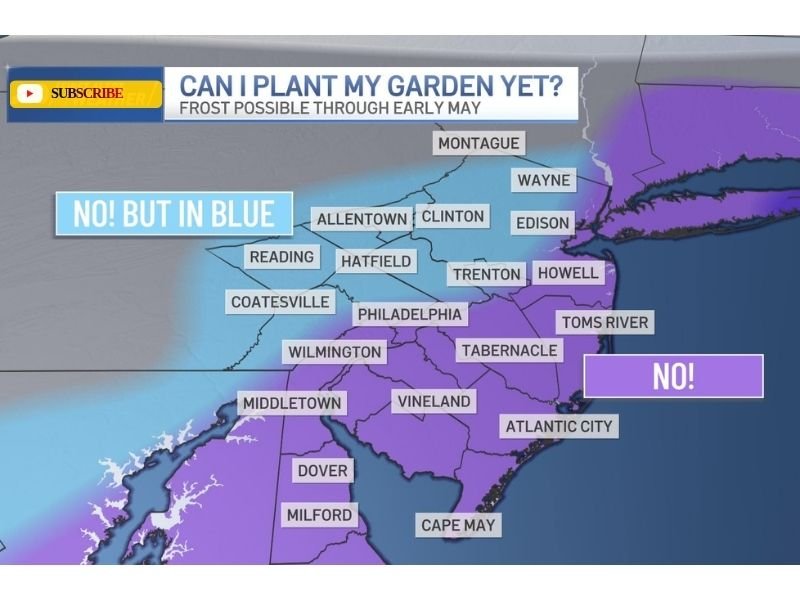
The advisory covers a broad swath of the mid-Atlantic region, stretching from Montague in northern New Jersey down through communities including Wayne, Clinton, Allentown, Hatfield, Reading, Coatesville, Trenton, Howell, Philadelphia, Wilmington, Toms River, Tabernacle, Middletown, Vineland, Atlantic City, Dover, Milford, and Cape May.
The entire region, whether marked in blue or purple on the First Alert weather map, falls within the frost-risk zone. Forecasters are urging residents across all of these areas to exercise caution before introducing warm-season plants and vegetables to outdoor garden beds.
Do Not Be Fooled by the Upcoming Warm Spell
While temperatures are expected to climb in the coming days, weather experts are cautioning that a brief warm-up is not an all-clear signal for planting season. Frost can and does occur even after stretches of mild weather in April and into early May across the Delaware Valley.
A single overnight frost event is sufficient to wipe out seedlings, transplants, and young vegetable plants that have not been hardened off or protected. The NBC10 advisory specifically warns residents not to be fooled by the upcoming warm temperatures into believing the risk has passed.
What Gardeners Should Know Before Planting
Gardening experts generally advise waiting until after the last average frost date for a given area before moving warm-season crops such as tomatoes, peppers, cucumbers, and basil outdoors permanently. For much of the Philadelphia metro and southern New Jersey, that window typically falls in mid to late May.
Until then, starting seeds indoors, using cold frames, or covering young plants on nights when temperatures are forecast to dip near or below freezing are the safest approaches. Monitoring nightly low temperatures closely will remain essential throughout April and into the first weeks of May for anyone who chooses to plant early.
A Reminder That Spring Weather Is Unpredictable
The mid-Atlantic spring season is historically unpredictable, with warm afternoons capable of masking the overnight cold that lingers well into the season. Residents in inland areas away from the moderating influence of the coast and larger bodies of water are generally at greater risk of experiencing frost conditions later into spring.
The varying shades across the forecast map reflect these localized differences in frost risk, though forecasters stress that no part of the region shown is fully in the clear as of this advisory. Gardeners of all experience levels are encouraged to remain patient and watch the nightly forecast closely before committing plants to the ground.
Are you holding off on gardening this spring, or have you already started planting? Share your experiences and local conditions with us at SaludaStandard-Sentinel.com.