Florida Declares State of Emergency as Drought, Wildfires, and Freeze Damage Collide and Officials Move to Speed Up Response
FLORIDA — Florida has issued a state of emergency as severe drought conditions, active wildfires, and agricultural impacts from a recent hard freeze combine into a growing statewide threat. Officials say the move is designed to speed up resources and cut red tape, not to signal panic.
What Triggered the State of Emergency Declaration
Over the past couple of weeks, Florida has dealt with record cold, a worsening drought, and increasing wildfire activity—a combination that can stress emergency crews, damage crops, and elevate fire danger as the state heads toward spring. The declaration is intended to help Florida get ahead of a fast-moving situation instead of reacting after conditions worsen further.
What a “State of Emergency” Actually Means for Residents
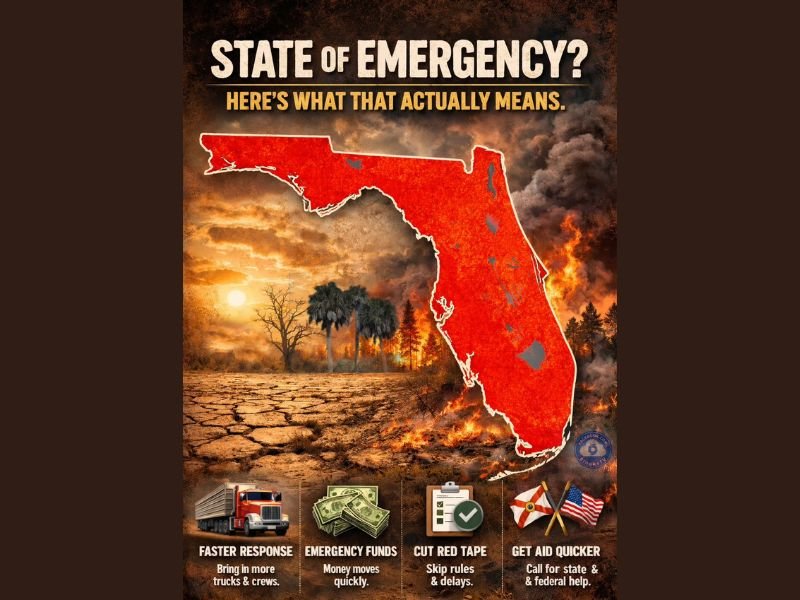
For most people, daily life may look the same—and that’s often the point. A state of emergency is largely about logistics and flexibility, allowing state agencies to move quicker, coordinate across regions, and deploy people and equipment where it’s needed without delays. In other words, when you see “state of emergency,” it’s less about fear and more about speed.
How the Declaration Speeds Up Help and Cuts Red Tape
The emergency order can allow trucks hauling crops to operate longer hours to keep supply chains moving. It can also allow weight limits to be adjusted when necessary to support transport and response operations.
It also makes it easier to shift money immediately toward wildfire response, temporarily pause certain rules that slow deployment, and request help from other states faster. Just as importantly, the declaration can help Florida access federal support more quickly if conditions continue to escalate.
Why Officials Are Watching Fire Season So Closely
With drought in place and vegetation drying out, wildfire risk can build quickly—especially if winds pick up and humidity drops. The hope is that a meaningful change in the weather pattern brings sustained rain that helps farmers recover and reduces fire activity across the state.
What are you seeing where you live—dry conditions, smoke, burn restrictions, or firefighting activity nearby? Share your local experience and join the conversation at SaludaStandard-Sentinel.com.