Dallas–Fort Worth, Plano, Denton and Sherman Placed Under Very High Pollen Alert as Warm Temperatures and South Winds Intensify Allergy Risk
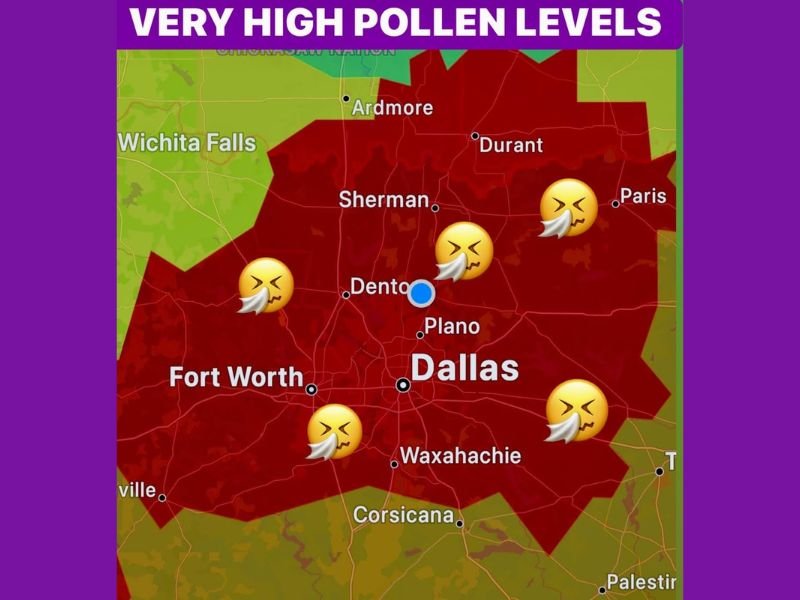
DALLAS, TEXAS — Residents across Dallas–Fort Worth and surrounding North Texas communities are under a red alert for very high pollen levels, as unusually warm temperatures and persistent south winds continue to fuel allergy concerns across the Metroplex.
Forecast data shows the entire Dallas–Fort Worth area now in the “very high” category, with pollen readings trending upward rather than easing as typically expected by mid-February.
Entire Metroplex Showing Red-Level Pollen Readings
Cities including Dallas, Fort Worth, Plano, Denton, Sherman, Waxahachie, and nearby communities are all within the highest pollen risk zone.
Normally, pollen levels begin to taper slightly by mid-February. However, warmer-than-average temperatures have kept vegetation active, while steady southerly winds are continuously transporting and reloading allergens across North Texas.
Health experts warn that allergy sufferers may experience worsening symptoms such as sneezing, congestion, itchy eyes, and fatigue during this stretch.
Brief Relief Expected Sunday
Forecasters indicate that Sunday may provide the most tolerable day in the upcoming week. A passing cool front and north-northwest winds could temporarily reduce airborne pollen concentrations. This short-lived shift in wind direction may offer some relief before conditions change again.
Pollen Levels Likely to Spike Again Monday
By Monday, southerly winds are expected to return, bringing another surge in pollen levels. As warmer air reestablishes itself, the pattern that has been aggravating allergy conditions is forecast to intensify once more.
Meteorologists note that the combination of active plant growth and persistent wind flow makes this a particularly challenging period for those sensitive to airborne allergens.
Allergy Season Off to a Rough Start in North Texas
For many residents, this early-season spike in pollen is already taking a toll. The extended stretch of above-normal warmth has effectively jump-started the allergy season earlier and more aggressively than usual.
Officials recommend limiting prolonged outdoor exposure during peak pollen hours, keeping windows closed, and monitoring local air quality updates. Are you feeling the effects of the high pollen levels across Dallas–Fort Worth or surrounding cities? Share how it’s impacting you at SaludaStandard-Sentinel.com.